Sunday, May 27, 2012

Determination of the Conductance of Strong and Weak Electrolytes

Objective:

1. To measure the conductance of potassium chloride, hydrochloric acid, sodium chloride and sodium acetate

2. To determine the dissociation constant of acetic acid

Introduction:

An electrolyte is any substance containing free ions that make the solution to be electrically conductive. Strong electrolyte can dissociate completely in water to form ions while weak electrolyte dissociate partially in water to form its ions. The conductance of solution is depends on the degree of dissociation of electrolyte. The higher the degrees of dissociation of electrolyte, the more ions are produced in the solution, hence the better the conductivity of electrolyte. According to Ohms’ law,

E = I R

where E is the potential difference, I is the current measured and R is the resistance. The term conductance is generally used for dealing with electrolyte and this is defined as the reciprocal of the resistance of the solution. The relationship between resistance and the conductance of the solution is defined as below:

L (ohm-1 or Ω-1) = 1 / R

Once the resistance, R is known, the conductivity or specific conductance (X) may be obtained from

X (Ω-1 cm-1) = d / AR

where d is the distance separation between two electrodes of the measurement cell, A is refers to the area. The cell constant k of the conductivity cell is defined as

k = d/A

and hence

X = kL

The specific conductance, X is the reciprocal of the resistance in ohm of a 1cm of liquid at a specified temperature. The molar conductivity, Λ of an electrolyte solution is defined as:

Λ (Ω-1 mol-1 cm2) = X /C

For weak electrolyte, the increase of molar conductivity with increasing dilution is ascribed to increased dissociation of the electrolyte molecules to free ions. However, a thermodynamic equilibrium exists between the un-dissociated molecules and the ions formed from dissociation. The dissociation degree, α at the given concentration, C is given by

α = Λ / Λo

where Λo is the molar conductivity in the limit of zero concentration or limiting molar conductivity. For strong electrolytes, the molar conductivity is higher than those of weak electrolyte at high concentrations. As the solutions become dilute, the molar conductivities also increase in the case of weak electrolytes but the variation is less steep than for weak electrolytes.

Kohlrausch’s Law states that at time infinite dilution, the molar conductivity of an electrolyte can be expressed as the sum of the contribution from its individual ions.

Λo = Λ+o + Λ-o

where Λ+o and Λ-o are refers to the conductivities of cation and anion at infinite dilution. In this experiment, the molar conductivity of weak electrolyte is determined by using Kohlrausch’s Law.

image ]

Given that the molar conductivities of strong electrolyte are expressed as the following:

clip_image004

Alternatively, Λo and the dissociation constant, ka of weak electrolyte may be obtained from the Ostwald dilution law:
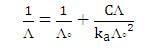
clip_image006

Materials:

0.2000M potassium chloride solution, 0.1000M acetic acid, 0.1000M, hydrochloric acid, 0.1000M sodium chloride solution, 0.1000M sodium acetate solution

Apparatus:

Conductivity meter, 100ml dilution flasks, pipette, burette

Procedure:

Part 1: Determination of cell constant

1. The conductance (L) of 0.2000M potassium chloride solution was measured.

2. The cell constant (k) was determined by using equation 6 with the given specific conductance (X) of this solution of 2.768x10⁻³ ohm-1 cm-1.

Part 2: Measurement of conductance

1. From the solution acetic acid provided, the successive solution with concentration of 0.0500M, 0.0250M, 0.0125M, 0.00312M, 0.00156M and 0.00078M solution were prepared.

2. The conductance of these solutions was measured.

3. The procedure was repeated with hydrochloric acid, sodium chloride, and sodium acetate.

4. The conductance of water used was measured.

5.

Results and calculations:

Part I Determination of Cell Constant

Conductance, L of:

KCl = 30.07 mΩ-1

Distilled water = 0.00 mΩ-1

Specific conductance, X = 2.768 × 10⁻³ Ω-1 cm-1

Cell constant, k = X / L

= 2.768 mΩ-1 cm-1 / 30.07 mΩ-1

= 0.09205 cm-1

Table 1 Conductance of solutions with different concentrationimage

Table 2 Specific conductance of each solution with different concentrationimage

Table 3 Molar conductivity of each solution with different concentrationimage

image

By using Kohlrausch’s law, the

image

Table 4 Degree of dissociation and dissociation constant of CH3COOH at different concentration

Concentration of CH3COOH (mol dm-3)

Degree of dissociation, α = Λ / Λo

Dissociation constant, ka of CH3COOH

0.10000

0.0189

3.64 x10⁻⁵

0.05000

0.0310

4.96 x10⁻⁵

0.02500

0.0388

3.92 x10⁻⁵

0.01250

0.0511

3.44 x10⁻⁵

0.00625

0.0622

2.58 x10⁻⁵

0.00312

0.1245

4.85 x10⁻⁵

0.00156

0.1950

7.37 x10⁻⁵

0.00078

0.2471

6.33 x10⁻⁵

*degree of dissociation is calculated by using the formula of α = Λ / Λo

*dissociation constant is calculated by using

clip_image014

Average value of dissociation constant, ka

= [(3.64 + 4.96 + 3.92 + 3.44 + 2.58 + 4.85 + 7.37 + 6.33) × 10-5] / 8

= 4.636 × 10⁻⁵


Table 5 1/Λ of CH3COOH with CΛ.

1 / Λ (Ω cm-2 mol)

CΛ (× 10-3 Ω-1 cm-1)

1.597

0.0626

0.971

0.0515

0.776

0.0322

0.590

0.0212

0.484

0.0129

0.242

0.0129

0.154

0.0101

0.122

0.0064

Graph of 1/Λ versus CΛ was plotted.

clip_image016

From Graph 4,

clip_image002[8]

Compared to y = mx + c

m = 1/ (ka x Λo2), c = 1 / Λo

1 / Λo = 0.013 Ω cm-2 mol

Λo = 1 / 0.013 Ω cm-2 mol

= 76.92 Ω-1 cm2 mol-1

m = 23 = 1/ (ka x Λo2)

ka = 1/ (76.92)2 (23)

= 7.35 x10⁻⁶


Precaution steps:

1. Use distilled water to rinse the electrodes before use.

2. Shake the electrode briefly to ensure that no air bubbles trapped in electrode.

3. Ensure the electrode surface is completely submerged in solution.

Tuesday, May 15, 2012

Qualitative Determination of Organic Compounds by Infrared Spectroscopy

Objective:

1. To determine the structural information on cinnamic acid prepared by using KBr disc technique

2. To identify an unknown sample by comparing it with the known sample

Introduction:

Infrared spectrometer (also known as spectrophotometer) is the instrument that used to determine the absorption spectrum for a compound. Two types of spectrometers are commonly being used in the analysis or research laboratory which includes dispersive and Fourier Transform (FT) infrared spectrometer. Both of these types of spectrophotometer provide the spectra of compounds in the common range of 4000 to 400 cm-1. Infrared region (IR) is divided into three regions which includes near IR, mid IR and far IR. The unit of IR measurement is wavenumber, the number of waves per centimeter, (cm-1). Although two provide nearly identical spectra for a given compound. FT infrared spectrometers provide the infrared spectrum much more rapidly than the dispersive spectrometers.

Infrared spectroscopy is resulted from the molecule vibration in which it includes stretching and bending. Every type of bond has a different natural frequency of variation and two of the same type of bond in two different compounds are in two slightly environments, two different structures have exactly the same infrared absorption pattern, or infrared spectrum. Although some of the frequencies absorbed in the two cases might be the same, but no identical infrared spectrum will appear in the two different molecules. Hence, infrared spectrum can be used for molecules much as a fingerprint can be used for human beings.

The main function of the infrared spectrum is to determine the structural information about chemicals either organic or inorganic. The functional groups that exist in a compound can be determined based on the spectra obtained. For example, infrared spectroscopy is also can be used to identify the chemicals from spills, paints, polymers, coatings, drugs and contaminants. The absorption of each type of bond is regularly found only in certain small portions of the vibrational infrared region. A small range of absorption can be defined for each type of bond. However, the absorptions are normally due to some other type of bond if outside this range. For an organic compound, it has a very rich and detailed spectrum while for an inorganic compound is usually much simpler.

In order to prepare a Kbr (potassium bromide) pellet, mortar and pestle, die set, sample holder and hydraulic KBr press are very important in preparation.

Mortar and pestle

image  

Die set

image

Hydraulic KBr press

image

sample holder

image

A KBr pellet is a dilute suspension of solid in a solid. It sis usually obtained by first grinding the sample in anhydrous KBr at a ratio of approximately 1 part sample to 10-100 parts KBr. The mixture is then being placed on a steel plate containing a paper card with a hole punched in it. The sample is placed into the centre so that it will lie in the infrared beam when placed on the spectrometer. A second steel plate is placed over the sample and the steel sandwich is placed in a hydraulic press and subjected to pressures of 15000 psi. Decompression usually will give a KBr pellet that is reasonably transparent both to visible light and infrared radiation. The only limitation of KBr is that it is hydroscopic. This is usually a good idea to obtain a spectrum run as a Nujol mull with sample. Since Nujol mull is a hydrocarbon and has no affinity for water when compared to KBr. Any absorption in Nujol between 3400- 3600 cm-1 can be attributed to the sample and not to the absorption of water by KBr.

Materials: KBr powder, cinnamic acid, acetone, unknown sample, mortar and pestle

Apparatus: FTIR machine, hydraulic KBr press

Procedure:

Sample preparation by using KBr disc

1. The pure KBr powder was grinded by using mortar and pestle.

2. KBr was placed into the die set in which the sample is sandwiched by the steel plate with smooth surface.

3. The die set was compressed tightly by using a hydraulic KBr press.

4. The spectrum of pure KBr was obtained.

5. The cinnamic acid and KBr powder were mixed homogeneously and the spectrum of this mixture was obtained.

6. An unknown sample’s spectrum was obtained through KBr disc.

7. The spectrum of cinnamic acid and unknown were compared.

Results:

The spectrums of cinnamic acid and unknown compound, please refers to the spectrums obtained.

Discussion:

Potassium bromide (KBr) powder is always being used in the infrared spectroscopy analysis in which KBr does not absorb infrared region from 4000 cm-1 to 400 cm-1. KBr is transparent to IR radiation in the range of above 400 cm-1 and has no absorption bands in the region traditionally used for IR spectroscopy. The absorption bands recorded on the KBr disc are come from the sample or impurities present in the KBr mixture. The disadvantage of using KBr pellet in IR spectroscopy is due to its hygroscopic property. The KBr pellet absorbs the water that appears in the atmosphere and hence causes the existence of a broad band in the IR spectrum at around 3400cm-1 to 3200cm-1. In order to prevent this problem, the KBr powder must always being kept in the oven before it is being used in the mixing of sample. Besides, KBr disc is prepared in the solid state because this can prevent the reaction between sample and atmospheric contaminants or solvent to occur easily.

Every molecule will have its own characteristic spectrum. The bands that appear depend on the types of bonds and the structure of the molecule. The functional groups that present in the cinnamic acid involves –COOH and C=C bonds. Based on the spectrum obtained, the C=O double bond stretch exists at the wavenumber of 1681cm-1 due to the conjugation effect and hence it shifted to lower wavenumber. Besides, the –COOH functional group has a broad band O-H stretch and a C-O stretch with the wavenumber of 3100cm-1 ~ 2800cm-1 and wavenumber of 1200cm-1 ~ 1320cm-1 respectively. Since the cinnamic acid is polar molecule, the formation of dimer of carboxylic acid caused the O-H stretch shifted to from 3400cm-1~3300cm-1 to the current wavenumber of 3100cm-1~ 3000cm-1. Besides, the O-H stretch is actually overlapped the sp2 C-H stretch in which sp2 C-H should appears between 3100cm-1 ~ 3000cm-1. The two bands at 1418cm-1 and 1628cm-1 are represented by the aromatic C=C double bond in cinnamic acid. The aromatic C=C double bond is actually present between 1700cm-1 ~ 1500cm-1, but they shifted to lower wavenumber due to the conjugation effect of benzene ring. In addition, the band of aliphatic C=C double bond is overlapped by the aromatic C=C double bond stretch which actually present between 1680cm-1 ~ 1620cm-1 with a single peak (aromatic has two peaks). The figure 1 below shows the structural molecule of cinnamic acid:

image

Figure 1 Structure of cinnamic acid

Based on the spectrum of unknown compound, the very characteristic of the compound is the C=O double bond stretch near 1700cm-1. Since the C=O stretch is present at around 1700cm-1, no conjugation occurs in the C=O double bond. The band is very sharp because C=O is a strong absorber. The bond absorption takes place at 1604cm-1 indicated that the compound contains C=C double bond. This is an aliphatic compound instead of aromatic compound since there is absence of C=C stretch at 1400cm-1. Due to the presence of C=C double bond, the sp2 C-H stretch is also present in the spectrum which is indicated by the absorption band at 3056cm-1. This compound is not an amide although there is a peak present at 3417cm-1. This is because amide has a strong band in this IR region. The particular band with 3417cm-1 may be due to the contribution of other bonds. Based on the presence of C=O and C=C, the unknown compound is predicted as an aliphatic ketone with γ or higher degree of C=C double bond.

Precaution steps:

1. Make sure the mortar and pestle, die set and sample holder are being cleaned and washed with acetone to avoid contamination.

2. Make sure the KBr disc does not expose too long to atmosphere.

3. Make sure the mixture of KBr and sample are mixed homogeneously.

4. The die set must be placed in the centre of the hydraulic press in order to prevent it to be spoiled.

Monday, May 7, 2012

Beer-Lambert Law

Objective:

1. To verify the Beer-Lambert Law

2. To determine the composition of complexes by using Job Method

Introduction:

Job method is also known as method of continuous variation. This method is used to determine the composition of a complex which is formed by two reacting species. It is most effective to be applied when only a single complex is formed in the solution. Job’s method is based on the concept that equimolar solution of metal-ion and ligand are mixed gradually by using different volume ratio. As the concentration of metal ion increase, the concentrations of ligand will decerease. It maintains the total number of mole reactants to be constant in a series of mixture of reactants. In this experiment, the mixture is made up of different fraction of nickel sulfate and ligand ethylene diamine. A wavelength at which the complex absorbs the strongest, λmax is selected. Then, the absorbance of each solution in the series at the wavelength of maximum absorbance is determined by using spectrometric method.

Job Method is often used to determine the soluble Ni2+ - en complexes in the solution. The “n” value of the complexes also can be calculated.

Z + nL à ZLn

where Z represents Ni2+ ion, L refers to the ethylene diamine (en). Different complexes could be formed in a mixture of metal Ni2+ ion and ligand en, for example, Ni(en)2+, Ni(en)22+, Ni(en)32+ and many more. The equilibrium constant of each Ni2+ - en complexes are shown in the following:

clip_image002

where K1, K2 and K3 are the equilibrium constant for each reaction respectively. Species that formed the most in the solution depends on the relative value of the equilibrium constant. If the value of K2 is bigger than K1, that means the concentration of Ni(en)22+ is higher than Ni(en)2+. In this experiment, every solution prepared contains the same concentration of Z and L. this is to ensure that the value of equilibrium constant of the formation of Z(L)n is large and the absorption for the species is maximum when the concentration of ligands en is exactly “n” times the concentration of ion Z. The value of “n” can be calculated if the concentration rate of L/Z is known for the solution that gives the maximum absorption.

Measurement of optical density (absorbance) at the λmax will show the maximum when the ratio of ethylene diamine to nickel sulfate is equally present in the particular mixture. This is because the solution contains the highest concentration of complex. So, in the graph of absorbance against mole fraction of ligand in the mixture will show a region starting with zero and increasing as the mole fraction of ligand increases as well as the concentration of complex. The absorbance of complex will also increase at the same time. At this region with positive slope in the graph, the ligand ethylene diamine is acting as limiting reagent. Further addition of mole fraction of ligand will decrease the mole fraction of nickel sulfate in the mixture. Since the nickel sulfate is insufficient to form complex with excess ethylene ligand, thus the absorbance due to less formation of complex then falls. The diagram 1 below shows the general trend of continuous variation of complex.

clip_image004

Diagram 1

According to Beer-Lambert law, the equation can be expressed as A = εcl where A is the absorbance, ε is refers to the molar absorptivity of liquid (L mol-1 cm-1), c is concentration of absorbing material (mol L-1) and l is the optical path length (cm). The amount of attenuation is depends on the concentration of absorbing molecules and path length over which absorption occurs. The absorbance of the complexes formed is directly proportional to the concentration of the complexes formed in the solution. The value of “n” could be calculated by using the formula as below:

clip_image006

Apparatus:

10ml volumetric flask, dropper, pipette

Materials:

UV-Vis spectrometer, 0.4M ligand ethylene diamine, 0.4M nickel sulfate solution, distilled water

Procedure:

1. 100cm3 of nickel sulfate (NiSO4.6H2O) with the concentration of 0.4M and 100cm3 of ligand-en with concentration of 0.4M were prepared.

2. The spectrums of each stock solution that has been prepared were obtained in the range of 500-65-nm.

3. Solutions with a total volume of 10cm3 were prepared in which the mole fraction of en and X is 0.0, 0.3, 0.4, 0.5, 0.6, 0.7, 0.8, 0.9 by using the stock solutions of NiSO4.6H2O and ethylene diamine.

4. The values of Y with, at least five different wavelengths were calculated and graph of X vs. Y was plotted for each results.

5. The value of X was determined when Y is at the maximum for each graph. By using the value of X in equation (6), the n values for Ni(en)n2+ complexes were calculated.

Results and calculations:

Table 1 Absorbance (A) at different wavelength, λ (nm)

image

In order to plot the graph of X versus Y, the equation of Y = [A – (1-X) Az]b is used.

where Az is the absorption of pure Ni2+ at the selected wavelength, b is optical path length

Table 2 Absorbance (Y) at Different Wavelength, λ (nm)

image

From Graph 1,

At λ= 530 nm, X = 0.8.

n1 = X / (1 - X)

= 0.8/ (1 - 0.8)

= 4

From Graph 2,

At λ = 545 nm, X = 0.715

n2 = X / (1 - X)

= 0.715 / (1 – 0.715)

= 2.51

From Graph 3,

At λ = 578 nm, X = 0.655

n3= X / (1 - X)

= 0.655/ (1 – 0.655)

= 1.90

From Graph 4,

At λ = 622 nm, X = 0.5

n4= X / (1 - X)

= 0.5/ (1 – 0.5)

= 1

From Graph 5,

At λ = 640 nm, X = 0.455

n5= X / (1 - X)

= 0.455/ (1 – 0.455)

= 0.83

Average of value of n = (4 + 2.51 +1.90 + 1 + 0.83) / 5

= 2.048

Thus, the n value for Ni(en)n2+ complexes = 2 since the n value must be an integer.

Discussion:

The reaction between nickel sulfate and ligand ethylene diamine produces nickel(II) bis(ethylenediamine) complex as product. This metal complex is a cationic complex. This is because the en anion carrying 0 charge since it is a neutral ligand while Ni2+ carrying +2 charge. The en ligand did not loss any proton during the formation of Ni-en complex so that it is a neutral ligand. Hence, the net charge of the Ni(II) complex is +2. The ethylene diamine ligand is a bidendate ligand which each en ligand coordinated to the Ni2+ metal via two dative bonds. The lone pair electron was donated from each nitrogen atom in ethylenediamine to form the two coordination bonding to Ni(II) metal. Since en ligand are weakly coordinated to the metal species, the en ligand is easily to be bonded to the Ni(II) metal so that the reaction can be took place at room temperature because the reaction is just required a small amount of energy.

In this experiment, the value of n was determined. Thus, the composition of the Ni(II) complex also was determined based on the value of n obtained. The ratio of Ni(II) cation to the ethylenediamine ligand in the metal complex is 1:2. For each metal complex in the solution, the Ni2+ metal is coordinated with two ethylenediamine ligand. The Ni(II) complex is predicted has the geometry of tetrahedral with the Ni(II) in the centre of complex. In the structure of complex, two ethylenediamine neutral ligands were coordinated surrounding to the Ni2+ metal centre. The ethylenediamone ligand is known as bidentate ligand (chelating ligand) which has can forms two coordinating point to the metal. The chelating effect allows the ethylenediamine bonded strongly to the Fe(III) complex.

Based on the data obtained, Beer-Lambert law was verified. This is because the data indicated that the absorbance is directly proportional to the concentration of complex formed and the path length over which absorption occurs. The path length is defined as 1cm in the experiment, because the curvette size is generally manufactured in 1cm. Since the path length is being held constant, thus the absorbance increases as the concentration of complex formed in the solution increases.

Precaution steps:

1. Gloves and goggles must be worn in order to prevent direct exposure to any chemicals.

2. The readings of apparatus must be taken parallel to the eyes in order to avoid parallax error which can cause the deviation in mole fraction.

Saturday, April 28, 2012

Determination of the Density of An Unknown Liquid

Objective:

1. To determine the density of a liquid using the pycnometer method

2. To identify the unknown liquid

Introduction:

Density is an elementary physical property of matter. It is defined as the ratio of mass to volume of a substance as shown in the following:

image Numerically it represents the mass per unit volume of matter. The SI unit of density is always expressed in the unit of kg m-3 or g cm-3. As the temperature increases, the density of a substance will be decreased, this will be discussed later in discussion. When thermal expansion occurs, the volume of the substance increases while its mass is remained. By referring to the formula given, the density of the substance decreases as the temperature increase. The density of a substance is varies with the change of temperature at surrounding.

In this experiment, the density of unknown liquid is determined by using pycnometer method. Density determination by pycnometer is a very precise method to determine the density of an unknown liquid. This experimental determination requires two important measurable quantities which are mass and volume of the selected piece of matter. The mass of the dry and empty pycnometer is represented by M and MW be the mass of the pycnometer filled with water at t°C. The mass of water in the pycnometer at this tempearature will be determined by using mass of pycnometer, MW minus mass of empty pycnometer, M. Let d be the density of water at t°C, so that the volume of pycnometer, V at this temperature can be expressed in the term as:

image The value of d can be refers to the Table 1 given.


Table 1 Density of pure water at different temperatures

Temperature, °C

Density, g cm-3

18

0.99862

20

0.99823

22

0.99780

24

0.99732

Let ML be the mass of pycnometer filled with the unknown liquid whose density is to be determined in this experiment. The mass of liquid is (ML – M). From equation 1, we can obtain the volume of empty pycnometer. The volume of pycnometer is equals to the volume of unknown liquid occupied. Thus, once we obtain the volume and mass of unknown liquid, the density of the unknown liquid, dL can be determined precisely. The density of unknown liquid, dL can be derived by substituted Equation 1 into Equation 2.

image Thus, the density of unknown liquid could be by using the formula as shown below:

image 

A pycnometer (shown in Fig. 1) is a glass flask that has a close-fitting ground glass stopper with a capillary hole through it. This fine hole allows the release of a spare liquid after closing a top-filled pycnometer and the escape of air bubbles in the liquid. Besides, the fine hole allows for obtaining a given volume of measured and/or working liquid with a high accuracy.

image

Materials:

Distilled water, unknown liquid

Apparatus:

Pycnometer, weighing balance

Procedure:

1. A dry and empty pycnometer was weighed and the weight was noted.

2. The pycnometer was filled up with distilled water and the air bubbles were allowed to rise before the stopper is being inserted.

3. The filled pycnometer was leaved at room temperature for about 5 minutes.

4. The neck of pycnometer was being picked up with papers between the fingers to avoid the expansion of pycnometer due to heat of the hand.

5. Make sure the outside of pycnometer dry, the pycnometer with distilled water was weighed again.

6. The V, volume of pycnometer was found.

7. Steps 1-7 were repeated with unknown liquid.

8. The experiment was repeated once.

Results and calculation:

Experiment

First time

Second time

Weight of dry and empty pycnometer

22.9880 g

22.9873 g

Weight of pycnometer + weight of water

74.4976 g

74.4965 g

Weight of pycnometer + weight of unknown

63.6783 g

63.6709 g

The experiment was conducted at room temperature of 24°C.

Average weight of dry and empty pycnometer

= (22.9880 + 22.9873) g / 2

= 22.9877g

Average weight of pycnometer + weight of water

= (74.4976 + 74.4965) g / 2

= 74.4971g

Average weight of pycnometer + weight of unknown liquid

= (63.6783 + 63.6709) g / 2

= 63.6746g

In order to calculate the density of unknown liquid, the formula below can be used:

where DL = density of unknown liquid

d = density of water at room temperature

= 0.99732 g cm-3

ML = weight of unknown liquid

= 40.6869g

M = weight of empty pycnometer

= 22.9877g

Mw = weight of water

= 51.5094g

DL = 0.99732 g cm-3 (63.6746g – 22.9877g) / (74.4971g – 22.9877g)

= 0.788 g cm-3

Thus, the density of unknown liquid is 0.788 g cm-3. By referring to the table 2 given as below, the unknown liquid is ethanol which possesses the nearest reading of density to 0.789 g cm-3.

Table 2 Density of pure organic compounds

Liquid

Density, g cm-3

Ethanol

0.789

Methanol

0.791

Chloroform

1.490

Benzene

0.877

Precaution steps:

1. Handle the pycnometer with extra care because it is very expensive and fragile.

2. Ensure the bulb and stopper of the pycnometer are both engraved with the same number.

3. The pycnometer must be empty and dry before conduct the experiment.

4. Make sure there is no air bubbles present in the pycnometer after filling.

5. Make sure that the pycnometer is completely dry before weighing.

Sunday, April 22, 2012

Sources of pigments

Usually, pigments are always being found in the animals and plants in which these pigments are known as biological pigment or biochromes. In the living organism, most of them have the biological structures which consist of pigments such as skin, hair, eyes, fur that present in animals. The most common animal pigment is refers to melanin and heme groups (haemoglobin). Melanin is naturally present in the human body especially in the skin laye while heme groups are found in the blood . Besides, leaf and flowers of plants contain their own biological pigment. Plant pigments include a variety of different kinds of molecule which includes porphyrins(chlorophyll), carotenoids, anthocyanins and betalains. Table 1 below shows the categories of plant pigment as well as their examples.

Table 1 Types of plant pigment and their examples

Plant pigments

Examples

Porphyrins/ Chlorophyll

Chlorophyll a, chlorophyll b

Carotenoids

Carotene

I. Alpha carotene

II. Beta carotene

III. Lycopene

IV. rhodopsin

Xanthophylls

I. canthaxanthin

II. zeaxanthin

III. lutein

Anthocyanin

Aurantinidin, cyaniding, luteolinidin, malvidin, peonidin, petunidin, rosinidin

Betalains

Betacyanin, betaxanthin

Both animals and plants have the pigments which can absorb and reflect sunlight at certain wavelength and hence the colours of living organism can be presented naturally as their physical appearances.

The organic and inorganic pigments are always being synthesized chemically from the reaction between organic compounds and from the reaction by using transition elements respectively. Most of them are artificially made in industry. However, some inorganic pigments occur naturally in the form of metal oxides and sulfides. For example, the natural inorganic pigment can be found in limonite, amorphous, hematite, ocher, umber, sienna and others.

Monday, April 16, 2012

Uses of pigments in living organism and non-living organism

Uses of pigments

1.In human being and animals

The natural pigment in the living organism plays a very crucial role in their daily life. Most common pigment presents in human and animal’s skin is known as melanin. Melanin is used to protect human being and animals from sunburn due to the ultraviolet radiation from sunlight. Eumelanin (one types of melanin) is the pigment which is mainly concerned with the protection of skin by absorbing the incoming ultraviolet radiation. The concentration of eumelanin will increase after more exposure of skin towards ultraviolet light. As a result, the skin becomes darker because it tends to protect the skin from damage. Some individual humans and animals have very little or lack of this pigment in their bodies is known as albinism (skin disease). In the diagram 3, the process explains the formation of melanin and the effect of lack of this pigment in the body.

clip_image002

Diagram 3 Formation of melanin process and the effect of lack of melanin

In addition, the biological pigment present in some of the animals especially prey are used to protect themselves from the hunting of predators. The biological pigment can imparts the colour of their physical appearances similar with the colour of surrounding environment such as rock, sand and leaf in order to make them difficult to be spotted by predators. For example, grasshopper and porcupines are using their pigment to protect themselves. This phenomenon that happens within the body living organism is known as camouflage (Diagram 4).

clip_image004

Diagram 4 Camouflage of grasshopper

Besides, the pigments present in animals are also used in mimicry in which one animal mimics the other one’s physical appearance in order to protect themselves from the predators. Normally, a palatable or harmless species will tend to mimic an unpalatable or harmful species. Mimicry between eastern coral snake and scarlet king snake in Carolinas is a good example to explain the importance of biological pigment in animals. Both species live in Carolinas, but the kingsnake is also found in regions without poisonous coral snakes. The predators that inherit an avoidance of coral snake’s colouration and hence they will attack less often towards the scarlet king snake in the regions where coral snake could be found.

clip_image006

Diagram 5 Mimicry between eastern coral snake and scarlet king snake

The biological pigments that present naturally in the animals are very important in mate selection in animals. This is because some of the female animals will choose the male animals as their partners based on the colourful appearances of the male animals. In the mate selection of peacocks, the female peacocks are always attracted by the peacocks possesses a colourful feather and tail.

clip_image008

Diagram 6 Peacock is wooing a peahen

2. In plants

For plant, the natural pigment is playing a very important role for their survival. Chlorophyll is the green pigment that is very essential for all the plants to carry out the photosynthesis. This is because chlorophyll can absorb the energy at certain wavelength from the sunlight in which it induces photosynthesis to takes place. Photosynthesis is a process that absorbs energy from sunlight to convert carbon dioxide and water to produce glucose and oxygen. Hence, pigment is very important for all the plants to survive.

Moreover, the presence of pigment in plants such as anthocynin(appears as red, blue or purple in plants) makes them to have colourful appearances. In order to attract pollinators, the colour of the flowers must be presentable and attractive and so that pigment is very determinative for plants. Pollination is a process of pollen transferring in plant reproduction and therefore enabling fertilization and sexual reproduction in plants. In flowers, the bright red and purple characteristic is adaptive for attracting insects or animals for pollinations. Anthocynin is also important in the fruits. This is because colourful skin of the fruits can attract the attention of animals and then the seeds could be dispersed into other area once the fruits are eaten by the animals.

clip_image010

Diagram 8 A European honey collects nectar while the pollen is collected by its body

Last but not least, the pigment found in the plants can act as an antioxidant in order to protect the plants from oxidation of free radical. The pigment is called carotenoids. Sunlight tends to induce the formation of free radical in the atmosphere in which they will destroy the plant structure by oxidizing the protein, DNA and photosynthesis structure of plants. The carotenoids participate in the energy transfer process in order to protect the plants from auto-oxidation. In non-photosynthesizing organisms, such as humans, carotenoids have been linked to oxidation-preventing mechanisms. For example, carotenoids tend to absorb or quench the energy of excited molecules such as singlet state oxygen and triplet state chlorophyll, thereby preventing the destruction of protein, DNA and the photosynthetic apparatus.

3. In application of painting industry and food dye

Pigment is also being widely used in the painting industry to apply on the textile, fabrics, cosmetic, plastic, paper and various materials. The pigment could be the biological pigment extracted from plants, organic pigment and inorganic pigment that synthesized chemically from metallic elements or found naturally. Pigment is one of the components of paint. Pigment serves two functions:

I. Providing colours

II. Protective function for surface underneath of paint and binder from destroyed by ultraviolet light

Pigment is a coloring material usually a finely ground powder which does not dissolve and it is suspended in a liquid solvent to become the coloring material in paint. In organic pigment, the colours are caused by the light energy absorbed by the delocalization of π electron conjugated system. However, the π electron will not absorb all the wavelength of light, therefore the unabsorbed light will be appears as the colours of paints. Inorganic pigments are being applied in paints due to their selectively wavelength absorption properties. During the formation of metal complexes, the transition of electron allows absorption of light energy at different wavelength to occur and so that inorganic pigments can also exhibit in many colours. Hence, colourful organic pigments and inorganic pigments are widely used in painting materials.

The extracted biological pigment in animals and plants can be applied in the food colourings. Some of the artificial pigment which is harmless to human body sometimes can be used in food colourings. In order to produce colourful and attractive food products, pigments are being used in the beverages, baked goods, dairy products, pet foods, and a variety of other products. Pigments can be used to increase the attractiveness and physical appearances of products and hence the products can have a higher market value. For example, the bright purplish-red pigment of the red dragon fruit is an excellent source of natural betanin.

4. In medical uses and health supplement

Nowadays, most the pigment extracted from the plants can be used in the manufacture of nutrient supplement in the current market. This is because the pigment that found in the plants such as carotenoids (beta-carotene and lycopene) can act as an anti oxidizing substance. This antioxidant can against the free radical that present in the atmosphere. Beside that, beta-carotene that found abundantly in carrot can be used to promote healthy eyesight of humans. For those people who have night blind can take this supplement in order to improve their eyesight at night.

Other that that, a derivative from chlorophyll which is named as chlorophyllin can be used in medicine for wound healing. The chlorophyllin is used to promote wound healing process and hence this can reduce the risk of patient to getting infection or inflammation which causes fatal.

Monday, April 9, 2012

Characteristics of pigments

Characteristics

Pigment is a substance that changes its colour when exposed to visible light by reflecting or absorbing different wavelength of visible light. Pigments appear as the colours they are due to their wavelength-selective absorption properties. White light is the equal mixture of the entire spectrum of visible light with a wavelength range from about 400 nanometers to about 780 nanometers. When the pigment encountered by light, parts of the visible light are absorbed by the chemical bonds of the conjugated systems and other components of the pigment. At the same time, some of the visible light at other wavelength are reflected or scattered.

Other than that, most of the pigments are exist as polar compounds. They are not soluble in water like dyes but they are tend to soluble in the oil or other polar solvent.

Pigments can be made up from a few to even more than ten benzene rings which attached with many different substituents in a single pigment molecule. Some of the pigments are made up from a porphyrin with a metallic element present in the centre. These pigments are called heme or porphyrin-based pigments. Diagram 1 shows the simplest structure of porphyrin which is one of the components in pigments. Examples of heme or porphyrin pigment are haemoglobin, myoglobin and hemocyanin.

clip_image002

Diagram 1 structure of porphyrin, the simplest structure of porphyrin

Furthermore, some of the biological pigments contain a long chain of hydrocarbon which attached to porphyrin-based. For example, chlorophyll is one of the examples that have a long chain hydrocarbon attached to a porphyrin-based. Diagram 2 shows the pigment structures of chlorophyll a and chlorophyll b.

clip_image004

Diagram 2 structure of chlorophyll

Organic pigments are considered as the substances that can imparts change of colour when expose to sunlight. This is because the presence of π electron conjugated system in organic compounds can absorb different wavelength of light to form many colourful dyes. Functional groups in organic pigment that absorb visible light is called chromophores such as -N≡N-, -C=C-, -C=O, -C=S, -C=NH, -N=O, -NO2. For inorganic pigments, the transition of electron from lower energy state to higher energy state induces the absorption of sunlight at certain wavelength and thus the complexes show colourful compounds. Hence, organic and inorganic pigments also possess a characteristic to exhibit different colours as their appearances.

Thursday, March 22, 2012

Mayonnaise production method

Objective:

1. To determine the type of food emulsion obtained by varying the mixture sequence

2. To produce the home made mayonnaise

Introduction:

Mayonnaise is a creamy, pale yellow, and mild-flavored food product which is frequently used in preparation of salads, sandwiches, and many other food products. Although the production of mayonnaise consisting of relatively few ingredients and processing steps, but successful formulation and processing are required an understanding of the role of each ingredient and the critical processing steps in order to create the delicate structure of mayonnaise. Mayonnaise is a unique emulsion which contains the mixture of water and oil. The major component in the mayonnaise is oil which dispersed throughout the lesser amount of continuous aqueous phase (water). The structure of mayonnaise is easily disrupted because of this unusual relationship between the oil and aqueous phase. Integration of processing and colloid chemistry is essential to understanding the formation and stabilization of the mayonnaise.

In this experiment, the mayonnaise is made by using 75% of oil, 8% of fresh egg yolk, 1% of mustard powder, 1.5% of salt, 1.3% of distilled water, and 13.2% of vinegar in producing mayonnaise. In a colloidal system, the minor component (dispersed phase) is usually being dispersed throughout the dispersion medium. However, the major component in mayonnaise (oil) is forced to be fine droplets to disperse throughout the lesser amount of continuous aqueous phase (dispersed medium). Mayonnaise is known as an oil-in-water (o/w) emulsion. When the emulsion of mayonnaise breaks, the water (dispersed phase) does not dispersed in oil (dispersed medium) and hence this allows the phenomenon of creaming formation to occur.

In order to maintain the stability of emulsion in mayonnaise, emulsifier acts as the most important role to stabilize the unique emulsion since the high amount of oil in water does not favor the formation of o/w emulsion. An emulsifier works at the surface of two immiscible liquids and tends to reduce to interfacial tension between two different liquids by reinforcing the in contact surface between them. The larger the ratio of surface area to volume of oil, the smaller the oil droplets dispersed in the water. Finer dispersion of oil droplets is required more emulsifier to surround them and thus this can maintain the stability of emulsion in the system. If emulsifier is not added, the two immiscible liquids will quickly separate after they mixed. Thus, emulsifiers are liaisons between the two liquids and serve to stabilize the mixture. In producing the mayonnaise, artificial emulsifier is not allowed. So, the source of emulsifier is normally obtained from egg yolk for stabilization of mayonnaise. The egg must be totally dissolved in the water before the addition of oil begins so that to achieve more efficient emulsion. Lecithin is a low molecular mass surfactant that can be found in egg yolk which acts as a hydrophilic effective emulsifier in oil-in-water emulsion.

Emulsion activity of emulsifier is based on its molecular structure. There is a hydrophobic part with a good non-aqueous solubility and hydrophilic part that is soluble in water. The hydrophobic part of the molecule is generally a long chain alkyl residue while the hydrophilic part of the molecule consists of a dissociable group. In a system containing two immiscible liquids such as oil and water, the emulsifier is located in the interface between two liquids which tends to reduce the interfacial tension of each liquid. The alkyl residues are solubilized in the oil droplets whereas the negatively charge of end group projected to the water. It maintains the stability of emulsion by involving the double electrostatic layer. The adsorption of negatively charge end group on the surface of oil globules causes the formation of a negative layer around them. Eventually, the oppositely charge particles will tend to approach to the particular negative layer and hence forming the second layer. This is known as double electrical layer. The electrical double layer creates repulsive forces greater than the attractive forces between the oil droplets. Hence, it can maintain the oil droplets from combining to each other in the emulsion.

Scattering light is one of the characteristics of colloidal system. Emulsion always exhibits the similar characteristic with colloidal suspension which is scattering the light. The oil-in-water emulsion present as a cloudy and turbid because of the existence of oil droplets dispersed in the aqueous phase. This is because the many phase interfaces between the two liquids scatter the light which passes through the emulsion system. The basic colour of emulsion is white. The Tyndall effect will scatter the light and distort the colour to blue if the emulsion is dilute. In a concentrated emulsion, the colour of emulsion system will scatter light and then distort the colour to yellow.

Several ways have been proposed to determine type of emulsion formed. The drop-dilution method can be used to determine the type of emulsion. To a small portion of the emulsion, add some water and stir slightly. If the water blends with the emulsion, it is an oil-in-water emulsion, but if oil blends with the outside phase it is a water-in-oil emulsion.

Another method of determining the type of emulsion is to use Sudan III, red dyes soluble in the oil but not in the water. A small portion of the finely powdered dye is dusted over the surface of the emulsion. If oil is the external phase the color gradually spreads throughout the emulsion. But if water is the external phase the color does not spread but is confined to the oil with which it comes in contact on the surface.

The microscope may be used to determine the type of emulsion formed. If the oil is dyed red, a red field with clear globules indicates a water-in-oil emulsion; red globules in a clear field show an oil-in-water emulsion. Sometimes a multiple emulsion is obtained, for example, a dispersed phase dispersed within a dispersed phase. The only means of identifying a multiple emulsion is by using the microscope.

Apparatus: beaker, measuring cylinder, glass rod

Materials: oil, egg yolk, salt, mustard powder, distilled water, vinegar

Procedure:

Three manufacturing procedures were investigated in order to illustrate the importance of the manufacturing procedure on emulsion stability.

Ingredients

%

Weight or volume

Oil

75.0

75 g

Egg yolk

8.0

8 g

Salt

1.5

1.5 g

Mustard powder

0.1

0.1 g

Distilled water

1.3

1.3 ml

Vinegar, distilled 5% acetic acid

13.2

13.2 ml

Total

100.0

100 g

In this formula, 30% of the aqueous ingredients equals to 99g water. In all the cases, make a paste of the mustard in a little water before using.

Procedure A

All the ingredients were mixed well in a beaker and stirred by using glass rod for 30 minutes.

Procedure B

1. The mustard powder, salt, water, vinegar, and egg yolk were mixed in a beaker.

2. The oil was slowly added into the mixture while stirring. Stir for 30 minutes.

Procedure C

1. Egg yolk was added to the beaker and blended thoroughly.

2. In a separate beaker, the mustard powder, 1.3g of water, 3.2g of vinegar, and salt were blended.

3. The mixture was stirred until all the salt dissolved.

4. The mixture was added into the egg yolk and was stirred for 5 minutes.

5. At this point, the oil was slowly added while stirring.

a. First 5 minutes, 10-15% of oil was added. The first addition should be small and gradual. Wait about 1 minute between additions.

b. During the next 15 minutes, 50% of oil was added.

c. During last 5 minutes, the remaining of oil was added.

6. Gradually add the remaining vinegar and stir for 5 minutes.

Take the observation on the three different mixtures on viscosity and dilution test.

Results:

Mixture

Procedure A

Procedure B

Procedure C

Viscosity

Low viscous

Moderately viscous

Highly viscous

Dilution test

Water in oil (W/O)

Water in oil (W/O)

Oil in water (O/W)

Monday, March 12, 2012

Suspension-sedimentation

Objective:

1. To obtain a good formulation in controlling the rate of flocculation and sedimentation

2. To study the formation of flocculation

3. To study the relationship between flocculation and sedimentation

Introduction:

In colloid chemistry, a heterogeneous mixture contains the solid particles with a diameter more than 1μm which are large enough to settle out from the liquid through sedimentation is known as suspension. Suspension is a coarse dispersion in which the insoluble particles dispersed in a liquid medium and it will settle out of the liquid after left for some time. Suspension shows difference with a solution in which the solute does not exist in the solid form and the solvent and solute are homogeneously mixed. Suspension is thermodynamically unstable due to the properties of suspension is always changing with time as they will undergo sedimentation. Suspension may be flocculated or deflocculated.

Sedimentation is a process of the particles settle down to the bottom of the solution. This is due to the instability of the particles in the system. The factors that affect the sedimentation are particles size, densities of dispersed phase and dispersed medium, temperature of liquids and the viscosity of the liquid. In a colloidal system, the particles are apart from each other due to their double layer charge. In suspension, the particles also possess the particular surface charges, but the attractive force in between the suspending particles are greater (after flocculating agent was added) than the repulsive force causes the particles to bind together and form larger particles. Usually, the forces acting on the particles that cause sedimentation occurs due to the gravity. The larger particles will sink to the bottom through sedimentation process which will accumulate in the bottom and the particles stack on the sediment. The sedimentation rate can be calculated by using the formula as shown in the following:

clip_image002

The second factor is the densities between the dispersed phase and dispersed medium. Generally, the density of dispersed phase (particles) is greater than the dispersed medium, however in certain cases particle density is less than dispersed phase, so suspended particle floats is difficult to distribute uniformly in the system. If density of the dispersed phase and dispersion medium are equal, the rate of settling becomes zero hence sedimentation does not occur. Temperature and viscosity of liquid are highly in related in which the temperature might affect the viscosity of the liquid. If the liquid is highly viscous, the sedimentation rate of the particles will be slower compared to the less viscous liquid. This is because when the terminal velocity decreases, the dispersed phase will settle at lower rate which may remain dispersed for longer time. The viscosity is known as the resistance of a substance to motion under an applied force.

Flocculation is a process of destabilizing the suspending particles in suspension by adding in certain chemicals called flocculating agent. In industry, this process is purposely used to cause the particles suspended in solution to aggregate into clumps or masses that then sink or else it can be removed easily by filtering. The formation of floc is due to the decrease in Zeta potential (in slipping plane) between the particles until Van der Waals forces predominate. Usually, the larger particles are known as floccules. The floc may float on the surface of liquid instead of sediment at the bottom if the density of floc is less dense than liquid’s density. This is known as creaming. The flocculating agent are includes neutral electrolyte (eg: KCl, NaCl), surfactant, and polymers. When the neutral electrolyte added into the suspension, it will affect the electrical barrier between the particles and hence the Zeta potential could be altered. For surfactant, the cationic and anionic surfactant could bring about the flocculation of suspended particles. However, optimum concentration is necessary because these compounds acting as the wetting agents to achieve dispersion. Surfactant decreases the surface energy by reducing the interfacial tension between the particles which attracted by van der Waals force and the solvent-particles’ interfacial tension. Besides, the addition of polymeric flocculating agents can induce the floc formation. The polymers possess long chain in their structure. The long chain will adsorb on the surface of the particles and the remaining part projecting out into the dispersed medium. The formations of bridging between these later portions tend to cause the formation of floc.

The flocculation process is reversible if the interaction forces between the floc are not strong. Floccules form when weak van der Waals forces are holding the particles together. However, the floccules are easily to re-suspend by shaking. If the floccules trap solvent during sedimentation, they are easily to be broken apart. Otherwise, the flocculation is considered as non reversible if the particles settle into a tighter aggregate by the strong interaction force without trapped solvent. Most of the flocculants are multivalent cation and anion which are able to neutralize the different charges (positive charge or negative charge) of the particles suspended in liquid. After overcome the surface charges of the suspending particles, the particles can easily to form floccules since their barrier have been minimized. Other than that, the deflocculation to form may be occurred once the magnitude of Zeta potential of the particles achieve sufficiently positive or negative (usually more than +30mV or less than -30mV). Thus, the phenomenon of flocculation and deflocculation depends on zeta potential carried by particles.

Apparatus: boiling tube, stopwatch, test tube rack

Materials: potassium dihydrogen phosphate, purified water, bismuth subnitrate, methylcellulose, parafilm

Procedure:

1. 40ml of flocculating reagent (potassium dihydrogen phosphate) was prepared which will be used in four of five suspensions.

2. Five 25ml graduated cylinder were assembled and were numbered consecutively. 2g of bismuth subnitrate was added to each boiling tube.

3. Sufficient water was added to make the 25ml of suspension in the 1st boiling tube.

4. 10ml of anionic flocculating reagent solution was added into the 2nd boiling tube and enough water was added to make 25ml.

5. 10ml of anionic flocculating reagent solution was added into the 3rd boiling tube and 0.5% methylcellulose was added to make 25ml.

6. 10ml of anionic flocculating reagent solution was added into the 4th boiling tube and 1.0% methylcellulose was added to make 25ml.

7. 10ml of purified water was added into the 5th boiling tube and sufficient 0.5% methylcellulose was added to make 25ml.

8. All the boiling tubes were covered with parafilm.

9. Each of them was inverted for several time to mix tehm well. The height of suspension were measured and recorded after 15minutes, 60minutes, and 120minutes.

Results:

Table 1 The height of sedimentation in each boiling tube over the time

Number of boiling tubes

Mixture in the boiling tubes

0min

15mins

60mins

120mins

First

2g bismuth nitrate + water

6.5cm

0.3cm

0.3cm

0.5cm

Second

2g of bismuth subnitrate+10ml of flocculating agent+water

6.5cm

1.2cm

1.5cm

1.6cm

Third

2g of bismuth subnitrate+10ml of flocculating agent+0.5% methylcellulose solution

6.5cm

2.0cm

1.2cm

1.6cm

Fourth

2g of bismuth subnitrate+10ml of flocculating agent+1% methylcellulose solution

6.5cm

1.4cm

1.5cm

1.3cm

Fifth

2g of bismuth subnitrate+10ml of purified water+0.5% methylcellulose solution

6.5cm

0.0cm

0.0cm

0.0cm

Table 2 The height of suspension in each boiling tube over the time

Number of boiling tubes

Mixture in the boiling tubes

0min

15mins

60mins

120mins

First

2g bismuth nitrate + water

0.0cm

6.2cm

6.2cm

6.0cm

Second

2g of bismuth subnitrate+10ml of flocculating agent+water

0.0cm

5.3cm

5.0cm

4.9cm

Third

2g of bismuth subnitrate+10ml of flocculating agent+0.5% methylcellulose solution

0.0cm

4.5cm

5.3cm

4.9cm

Fourth

2g of bismuth subnitrate+10ml of flocculating agent+1% methylcellulose solution

0.0cm

5.1cm

5.0cm

5.2cm

Fifth

2g of bismuth subnitrate+10ml of purified water+0.5% methylcellulose solution

0.0cm

6.5cm

6.5cm

6.5cm

Precaution steps:

1. Do not shake or move the boiling tubes consist of suspension.

2. Make sure the content in each boiling tube is mixed well.

3. Make sure all the boiling tube are properly covered by parafilm

Sunday, March 4, 2012

Verification of the Henderson-Hasseblach Equation Using Buffer Solution

Objectives:

1. To study the validity of Henderson-Hasseblach equation to a buffer system

2. To determine the buffer capacity of a buffer solution

Introduction:

Buffers are solutions that maintain a relatively constant pH when an acid or a base is added into a buffer solution. They protect other molecules in solution from the effects of the added acid or base. Buffer solution contains either a weak acid (HA) and its conjugate base (A-) or a weak base (B) and its conjugate acid (BH+). They are extremely important for the proper functioning of biological systems such as blood, which is a natural example of buffer solution.

An acid is defined as a substance that can dissociate in water to produce hydrogen ions, H+ while a base is a substance that can dissolve in water to produce hydroxide ions, OH-. The acid is categorized into two groups which are strong acid and weak acid. Strong acid is the acid that dissolves completely in water to produce a lot of H+ ions whereas weak acid is the acid that ionizes partially in water to produce less H+ ions.

An important characteristic of weak acids and weak bases is their ability to form buffer systems. The action of a buffer is caused by the presence of both the weak acid and its anion or the weak base and its cation. These are known as conjugate acid-base pair. If strong base is added into a weak base, it will dissociate into OH- and conjugate acid. The conjugate acid produced will neutralize the base added and hence control it pH. On the other hand, if string acid is added, the weak base will react with the strong acid by neutralizing it. So, the pH of the solution can be maintained. This is same applied by the acid buffer system with H+ ion and its conjugate base.

Consider a sodium acetate-acetic acid buffer system in which containing the same amounts of acetic acid (CH3COOH) and its conjugate base, acetate ion (CH3COO-). When the addition of a strong acid hydronium ion (H3O+) to the solution. The acetate ion (base form) in the buffer reacts with the hydornium ion to neutralize it.

clip_image002

In the same way, the addition of the strong base provide hydroxide ion, OH- to the solution, then the acetic acid will reacts with this ion and neutralize it.

clip_image004

The amount of strong acid or base can be added to a given volume of a buffer system without a significant change in pH in +/- 1.0 unit. This is known as the buffer capacity of a buffer system.

The strength of acid is depends on the degree of H+ ionization in the water. For base, its strength is depends on the degree of OH- ionization in the water.

clip_image008

The magnitude of the equilibrium constant for an ionization reaction can be used to determine the relative strengths of acids and bases. The equilibrium constant for acid dissociation is

clip_image010

The equilibrium constant for base dissociation is

clip_image012

In order to obtain Henderson Hasselbalch equation, rearrange the following equation:

clip_image009[4]

clip_image014

clip_image016

clip_image018

Buffer capacity of a buffered solution is defined as in terms of the amount of protons or hydroxide ions it can absorb without a significant change in buffer. A buffer with a large capacity contains large concentration of the buffering components and thus can absorb a relatively large amount of protons or hydroxide ions and show little pH change. The pH of a buffer system is determined by the ratio [A-]/[HA]. The capacity of a buffer system is determined by the magnitude of [A-] and [HA]. Buffer capacity is also depends on the concentration of the solution. The greater the concentration of a weak acid and its conjugate base, the greater the buffer capacity. Buffer capacity may expressed as

clip_image020

A buffer solution has the maximum buffer capacity when the ratio clip_image022 or clip_image024 = 1 for acidic buffer and basic buffer respectively. In such a solution pH = pKa for acidic buffers and pOH= pKb for basic buffers. A solution can act as buffer only if the ratio of salt to acid or base is between 0.1 and 10. Thus, the pH of an acidic buffer can have the range from pKa - 1 or pKa + 1. Similarly, a basic buffer can act as buffer in the pOH range from pKb – 1 to pKb + 1.

Materials: standard buffer solution (pH= 4.00), 1 M aqueous sodium hydroxide, 1 M aqueous acetic acid

Apparatus: burettes, beaker (100cm3), pH meter

Procedure:

1. The pH meter is calibrated by standard buffer solution, pH=4.00.

2. 50cm3 of the 1 M acetic acid and 1 M sodium hydroxide are pipetted into a 100cm3 beaker.

3. The solution is mixed thoroughly and pH of the solution is measured.

4. The pH measurement is repeated for further 1 cm3 addition each up to a total of 5cm3 of 1 M sodium hydroxide.

5. The pH of the solution is measured for further 5cm3 additions each up to a total of 45cm3 of 1 M sodium hydroxide.

6. The pH measurement is repeated for further 1 cm3 addition each up to a total of 50cm3 of 1 M sodium hydroxide.

Result and calculation:

Table 1 The average pH value of buffer solution

Volume of aqueous 1 M CH3COOH (X) ,cm3

Volume of aqueous 1 M NaOH (Y), cm3

pH

[ Salt ] / [ Acid ] = y/(x-y)

Log10 ( [ Salt ] / [ Acid ]

50

1

2.97

0.0204

-1.690

50

2

3.26

0.0417

-1.380

50

3

3.45

0.0638

-1.195

50

4

3.58

0.0870

-1.060

50

5

3.69

0.1111

-0.954

50

10

4.06

0.2500

-0.602

50

15

4.32

0.4286

-0.368

50

20

4.54

0.6667

-0.176

50

25

4.74

1.0000

0.000

50

30

4.95

1.5000

0.176

50

35

5.21

2.3333

0.368

50

40

5.65

4.0000

0.602

50

45

10.03

9.0000

0.954

50

46

11.76

11.5000

1.061

50

47

12.03

15.6667

1.195

50

48

12.19

24.0000

1.380

50

49

12.29

49.0000

1.690

50

50

12.37

-

-

Turning point at pH

= (5.65+10.03)/ 2

= 7.84