Friday, October 14, 2011

Determination of the Molar Entropy of Camphor

Objectives:

1. To study the molar entropy of fusion of camphor

2. To determine the molar entropy of fusion ( ) of camphor

Introduction:

Camphor, C10H16O is an aromatic crystalline compound which is obtained from naturally from the wood or leaves of the camphor tree or synthesized. The camphor is used in this experiment to determine its molar entropy of fusion. Molar entropy of fusion is denoted as ( ), which represents the entropy increases when a particular substance is melting. The entropy is always depends on the state of the substance. The disorder in entropy of a substance is the lowest in solid state, whereas liquid is more disorder and followed by gas state with highest disorder in entropy. In another words, the degree of disorder increases in the transition from a closely packed molecule arrangement solid to the disorganized molecules arrangement of liquid state. But, in this experiment, the entropy of camphor is the energy absorbed by the camphor is disturbed by the adding of naphthalene in the system.

The molar entropy of fusion ( ) of camphor can be determined cryoscopically. Entropy, S is a thermodynamic quantity that is a measure of how dispersed the energy of a system is among the different possible ways that system can contain energy. When the energy of a thermodynamic system is concentrated in a relatively few energy states, the entropy of the system is low. When the same energy is dispersed or spread out over a great many energy states, the entropy of the system is high. Cryoscopy is a technique used for determining the molecular weight of a solute by dissolving a known quantity of the solute into a solvent and records the drops of freezing point of the solvent. For dilute solutions of naphthalene in camphor is described as below

image

Colligative properties are defined as those properties of solutions that depend on the number of dissolved particles in solution, but not on the natures of the solutes. The freezing point and boiling point of the particular solutions will be affected. This is because a liquid solution containing a solvent with an impurity is more disordered than a pure solvent. Therefore more energy must be removed to take the solution from its highly disordered liquid state to its ordered solid state than to do the same for a pure solvent. Hence, solutions of solvents with impurities freeze at a lower temperature than pure solvents due to colligative effect. In this experiment, colligative property is related to the freezing point depression and molality of a liquid.

The molality of a liquid is calculated by using the number of mole of solut is divided by the mass of solvent used in kg

image

The freezing point depression is calculated by

Apparatus: test tube, beaker (250cm3), Bunsen burner, thermometer (0-200 )

Materials: camphor (M=152g/mol), naphthalene (M=128g/mol)

Procedure:

1. 2g of camphor is being melted and stirred in a test tube.

2. The test tube in an air jacket and is allowed it to solidify.

3. The air jacket is removed and the test tube is heated gently until melting commerce.

4. The content is stirred with the thermometer and the temperature at the last crystal just disappears.

5. 0.05g of naphthalene is added into this test tube and the process is repeated.

6. The procedure is repeated for further 0.05g of naphthalene up to a total weight of 0.20g of naphthalene.

Results and calculation:

Table 1 Weight of naphthalene and camphor, no of mole for naphthalene and camphor, mole fraction, freezing point and T

Weight of naphthalene (g)

Number of moles of naphthalene (mol×10-4)

Weight of camphor (g)

Number of moles of camphor (mol)

X

Freezing point (K)

∆ T

Kf

-

-

2.00

0.0132

-

445

-

-

0.05

3.91

2.00

0.0132

0.0288

433

12

417

0.10

7.81

2.00

0.0132

0.0559

429

16

286

0.15

11.72

2.00

0.0132

0.0815

421

24

294

0.20

15.63

2.00

0.0132

0.1059

409

36

340

*Molecular mass of naphthalene and camphor are 128.06 g/mol and 152.13g/mol

ΔT= depression of freezing point of the mixture in K

= Kfp x m

Kf p= freezing point depression constant (Kfp of camphor= 37.7 /m)

m = molality of the solute= No. of solute mole (mol)/ mass of solvent (kg)


A graph of Kf versus X was plotted.

∆T = Kf X

= 12 / 0.0288

= 417

= 16 / 0.0559

= 286

= 24 / 0.0815

= 294

= 36 / 0.1059

= 340


Since

f = RTo2/ Hf Equation 1

f = Hf / To Equation 2

thus substitute Equation 2 Equation 1

f = RTo/ Sf

Sf = RT0/ f

From the graph plotted,

Lim Kf = RT0 / ∆Sf

X 0

RT0 / ∆Sf = 222.5

222.5 = 8.314 * (172 + 273) / ∆Sf

∆Sf = 16.628 J K­-1 mol-1

∆Sf = ∆Hf / T0

∆Hf = 16.628 J K­-1 mol-1 * (172+273) K

= 7.399 kJ mol-1


Discussion:

In this experiment, the molar entropy, Sf of the camphor is obtained which has the value of 15 J/mol. Before obtain the molar entropy, we have to measure the temperatures change in each of the different amount of naphthalene added into the camphor. After the temperature changes are obtained, the cryoscopic constant for each amount of naphthalene added are calculated, the value of cryoscopic costant for each are shown in table 2. By using the value obtained, a graph of cryoscopic constant against mole fraction of naphthalene in the mixture is plotted and the y-intercept represents the cryoscopic constant of pure camphor which is 246.5.

According to the Thermodynamics Second Law, the entropy of a substance is the measure of the degree of disorder in a particular system. The value of the entropy of a distribution of atoms and molecules in a thermodynamic system is a measure of the disorder in the arrangements of its particles. State of the substance can determine the entropy of its substance. The degree of disorder is increase from solid state to liquid state and finally to gaseous state. In another word, the entropy of the same substance has higher entropy when it is in gaseous state compared with solid or liquid state. Molar entropy of fusion of camphor is denoted as ( ), which represents the entropy increases when a pure camphor is melting.

The different amounts of naphthalene are added into camphor as the pure camphor act as the control experiment. The pure freezing point of camphor is 172 in this experiment. After added the naphthalene, the freezing temperature are decrease as more amount of naphthalene is added into the same amount of camphor. The more the naphthalene added, the lower the freezing temperature of the particular mixture. This is showed that the system of camphor is being disturbed by naphthalene. The naphthalene molecules are rearranged with the camphor naphthalene in order to form bond in between each other. For a substance in liquid state to freeze, the naphthalene and camphor molecules begin to form cluster of molecules to convert to solid state. The molecule moves in high speed are not able to form a cluster of molecule with each other, so the molecules prefer move slower by reducing their kinetic energy. The kinetic energy is converted into heat energy that is being released to the surrounding as the temperature of the mixture decrease. Thus, the freezing point of the solvent with different solute is lower than the freezing temperature of pure solvent.

Precaution steps:

In this experiment, there is some precaution steps should be taken. Firstly, the zero error should be avoided when measuring the weight of naphthalene and camphor. This can be avoided by press the tare button when use it. Secondly, the reading of temperature on thermometer should be taken parallel to the eyes to avoid parallax error.

Monday, September 19, 2011

Reactions of Aldehydes, Ketones And Phenols

Objective:

1. To carry out some simple chemicals test in order to distinguish between aldehydes, ketones and phenols

2. To study the properties of aldehydes, ketones and phenols.

3. To identify the unknowns A, B, C, D and E.

Introduction:

Part I : Reaction of Aldehydes and Ketones

The carbonyl group is C=O and any compound containing this group that can be described as a carbonyl compound. Carbonyl compounds fall into two main classes: aldehydes and ketones on the one hand and carboxylic acids and their derivatives on the other hand. The characteristic reactions of the aldehydes and ketones are addition and oxidation reactions occurring at the unsaturated carbonyl group. With the same reagent, aldehydes usually react faster than ketones, mainly because there is lees crowding at the carbonyl carbon and the steric effect. Aldehydes are also more easily oxidized than ketones. The carbonyl and other compounds investigated in this experiment are tested in each of the following ways:

A) Chromic Acid (H2CrO4)

Chromic acid is a strong oxidant. Aldehydes are oxidized to carboxylic acids by chromic acid. The Cr6+ in the chromic acid which is orange, then is reduced to Cr3+ which is green/blue. Ketones are not oxidized by chromic acid.image B) Tollen’s Test (Ag(NH3)2+ / OH-

Tollen’s reagent (Ag(NH3)2+ / OH- is a weak oxidant. Aldehydes are readily oxidized to carboxylic acids by Tollen’s reagent to produce a silver mirror on the inside of a clean test tube. Ketones are not oxidized by Tollen’s reagent.image

C) Fehling’s solution

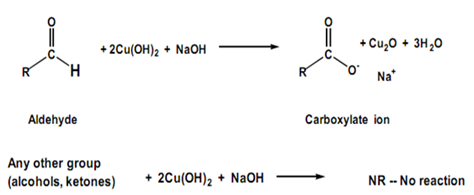
Fehling’s solution is an oxidizing agent. It is prepared by mixing equal part of Fehling’s solution I (copper(II) sulfate) and Fehling’s solution II (sodium potassium tartate and sodium hydroxide). Aldehydes are easily oxidized to carboxylic acid by Fehling’s solution and will reduce the cupric ion which complexed with tartate ion to cuprous oxide. A positive result is indicated by the formation of a brick red precipitate. Ketones are not oxidized by Fehling’s solution.image
D) 2,4-dinitrophenylhydrazine (DNP Test or Brady’s Reagent)

2,4-dinitrophenylhydrazine (Brady’s reagent) is an important reagent related to hydrazine. Most aldehydes and ketones very readily with this reagent to give the yellow orange and red precipitates of 2,4-dinitrophenylhydrazones. Unconjugated aldehydes and ketones give precipitates toward the yellow while conjugated compound tend to be deeper colour of red. The conversion of aldehydes and ketones into hydrazone is an example of the addition-elimination reaction occurring at the unsaturated carbonyl group.image

E) Iodoform Test

Iodoform test can be used for the detection of acetalaldehyde and all methyl ketone which have the formula:image

Iodoform, CHI3 is a yellow solid with a strong medicinal smell. Iodoform will precipitate out of a mixture of methyl ketone, iodine and base.image For acetaldehyde, the following reaction shows the formation of iodoform:image
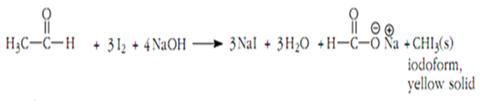
Compounds that are easily oxidized to acetaldehyde and methyl ketones also give a positive iodoform test. Only ethanol can be oxidized to acetaldehyde and secondary alcohol that have the general formula CH3CH(OH)R can be oxidized to methyl ketones.

Part II: Reactions of Phenols

Compounds in which a hydroxyl group is bonded to an aromatic ring are called phenols. Alcohols and phenols are similar in some ways, but there are enough differences so that they are considered different functional groups. One major difference is that phenols are typically about a million time more acidic than alcohols. We shall focus on chemical reactions that can help to distinguish phenols from alcohols.

A) Solubility of Phenols

The presence of a hydroxyl group in phenols permits hydrogen bonding between them and the similar substance water H-OH. This leads to appreciable water solubility of phenols. If non polar groups like alkyl groups are attached to the aromatic ring, the water solubility of the phenols decreases.

B) Acidity of Phenols

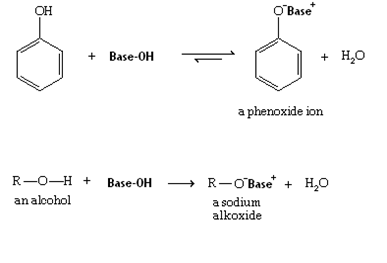
Most phenols are weaker acids than carboxylic acids and stronger than alcohols. When phenols react with a base, the phenol is converted phenoxide anion. The phenoxide anion is more soluble in water than the corresponding phenol. Consequently, if a water-insoluble phenol is treated with an aqueous solution of a base that is strong enough to convert most of the phenol to phenoloxide anion, that phenol will dissolve in the aqueous base as the phenoxide salt. None of the above-mentioned bases is strong enough to convert a substantial amount of a typical alcohol into an alkoxide anion which would cause a water-soluble alcohol to dissolve as its alkoxide anion.image
C) Reaction with Bromine Water

The hydroxyl groups of phenols activate the ring to electrophilic substitution, so that reaction occurs under very mild conditions. With bromine water and phenol, the product is 2,4,6-tribromophenol, which has such a low solubility in water and appears as a white precipitate.image

D) Ferric Chloride Test

Phenols give a colouration (pink, green or violet depending on the structure of the phenol) with ferric chloride. This is due to the formation of certain coordination complexes with the iron. Ordinary alcohols do not react. This test may be used to distinguish most phenols from alcohols.image

Apparatus: test tubes

Materials: chromic acid, Tollen’s reagent, Fehling’s solution I, Fehling’s solution II, 2,4-dinitrophenylhydrazine, iodine solution, 1,4-dioxane, acetophenone, 3-pentanone, acetaldehyde, benzaldehyde, isopropyl alcohol, 1-propanol, unknown A, unknown B, unknown C, 5% sodium hydroxide, 5% sodium carbonate, 5% sodium bicarbonate, bromine water, 1% ferric chloride, phenol, 2-naphthol, unknown D, unknown E

Procedure:

Part I: Reactions of aldehydes and ketones

A) Chromic acid test

1. To 1ml of acetaldehyde, benzaldehyde, acetophenone, 3-pentanone, isopropyl alcohol and 1-propanol in separate dry test tube, 1ml of chromic acid was added. Any changes in colour was observed.

2. The above procedurs was repeated with unknown A,B and C.

B) Tollen’s test (Ag(NH3)2+/OH-)

1. Preparation: Tollen’s reagent is prepared freshly before it is needed. 2 drops of 3M of NaOH was added to 10ml of 0.2M AgNO3. Then 2.8% ammonium hydroxide was added dropwise with stirring until the precipitate of AgNO3 just dissolves. Allow time for the solid to dissolve.

2. Cleaning test tube: A set of test tubes were cleaned by adding 5-10ml of 3M NaOH to each and heating them in water bath while preparing the Tollen’s reagent.

3. Carrying out the test: The NaOH was emptied and rinse them with distilled water and 2ml of Tollen’s reagent was added to 1ml of acetaldehyde, benzaldehyde, acetophenone, 3-pentanone, isopropyl alcohol and 1-propanol in separate test tube. Set the tubes aside with agitating the contents for few minutes. Warm the mixture briefly on water bath if no reaction.

4. Step 3 was repeated with unknown A, B and C and observations were made.

5. Destroying the reagent: Add a few drops of HNO3 to Tollen’s reagent after done the test.

C) Fehling’s test

1. Preparation: Equal volume of Fehling’s solution I (copper(II) sulfate) and Fehling’s solution II (sodium potassium tartrate and sodium hydroxide) were mixed.

2. To 1ml of acetaldehyde, benzaldehyde, acetophenone, 3-pentanone, isopropyl alcohol and 1-propanol in separate dry test tube, 6 drops of Fehling’s solution were added. The test tubes were heated in a hot water bath for several minutes. Reddish precipitate of Cu2O will indicate a positive test for aldehyde.

3. Step 2 was repeated with the unknown A, B and C and observations were made.

D) 2,4-dinitrophenylhydrazine

1. Preparation: 4g of 2,4-dinitrophenylhydrazine was dissolved in 8ml of concentrated H2SO4. The mixture was cooled and added with 90ml of methanol and 10 ml of water.

2. To 1ml of acetaldehyde, benzaldehyde, acetophenone, 3-pentanone, isopropyl alcohol and 1-propanol in separate dry test tube, 2ml of Brady’s reagent was added and were shaked vigorously. Warm and allow to stand for 5-10 minutes if no precipitation form immediately. A crystalline precipitate indicates the presence of a carbonyl compound.

3. Step 2 was repeated with the unknown A, B and C and observations were made.

E) Iodoform test

1. Preparation: 20g of KI and 10g of iodine crystals were dissolved in 100ml of water.

2. To 1ml of acetaldehyde, benzaldehyde, acetophenone, 3-pentanone, isopropyl alcohol and 1-propanol in separate dry test tube, 2ml of water was added. For insoluble compound, 1,4-dioxane was added one drop at a time with swirling until a homogenous solution is formed. Then, 2ml of 5% NaOH solution was added with swirling and potassium iodide-iodine reagent was added dropwise until a deep red-brown colour persists. The mixture were heated in water bath of 60 °C at least two minutes. The test tubes were removed from water bath and sufficient 5% NaOH was added dropwise to cause the disappearance of red brown colour. Cool down to room temperature and record whether a yellow precipitate forms within 15 minutes.

3. Step 2 was repeated with the unknown A, B and C and observations were made.

Part II: Reactions of phenols

A) Solubility of phenols

1. To 0.05g of phenol and 2-naphthol in separate dry test tube, 2ml of water was added. Mix and observe whether the compound is completely soluble, partially soluble and insoluble.

2. The above procedure was repeated with unknown D and E. Observation were made.

B) Acidity of phenols

1. To 0.05g of phenol and 2-naphthol in separate dry test tube, 2ml of NaOH, Na2CO3, NaHCO3 were added. Mix and observe whether the compound is completely soluble, partially soluble and insoluble.

2. The above procedure was repeated with unknown D and E. Observation were made.

C) Reaction with bromine water

1. 0.05g of phenol and 2-napthol were dissolved in 2ml of dilute HCl in separate dry test tube and bromine water was added with shaking until the yellow colour persists. Observation was made.

2. The above procedure was repeated with unknown D and E. Observation were made.

D) Ferric chloride test

1. 0.05g of phenol and 2-napthol were dissolved in water (or mixture of water and ethanol if the compound is not water soluble) in separate dry test tube and 1% of ferric chloride was added dropwise. Shake and observe any colour changes.

2. The above procedure was repeated with unknown D and E. Observation were made.

Results:

Part I: Reaction of Aldehydes and Ketones

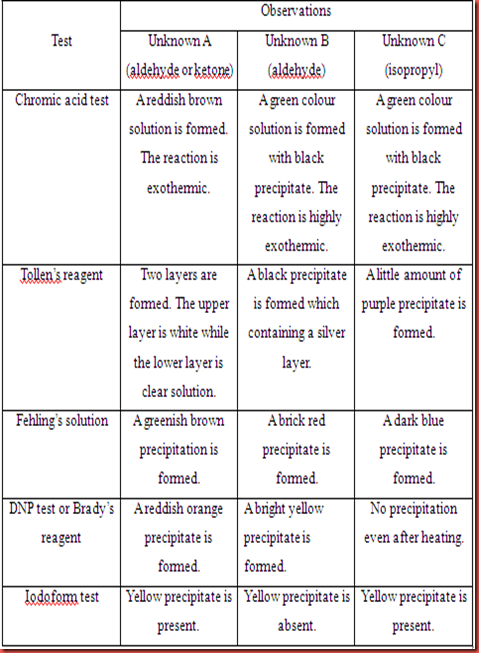
Table 1.1 Chemical tests on unknown A, B and C.
image

Table 1.2 Inferences based on observation for unknown A,B and C.Part II : Reactions of phenols

image

Table 2.1 Chemical tests on Unknown D and E

image

Table 2.2 Inferences based on observation for unknown D and E.

image

Discussion:

Chromic acid test can be used to differentiate aldehyde and ketone. Since chromic acid is a strong oxidizing agent. It can oxidize alcohols and aldehydes to form carboxylic acid but it will not oxidize ketone. The change in colour from orange solution to green solution shows a positive test which due to the change in oxidation state of the chromic metal. The chromic acid will be reduced from Cr6+ (orange) to Cr3+(green) which undergoes reduction. Tollen’s reagent is a test used to identify a carbonyl compound whether the compound is aldehyde or ketone. Aldehyde is readily oxidized to form carbocylic acid but ketone is not. The positive result in Tollen’s reagent is the formation of silver mirror or black precipitate in the solution. For Fehling’s test, the functional group of aldehyde can be tested via reduction of deep blue solution of copper(II) to a formation of brick red precipitate. In DNP test, Brady’s reagent is usually used to test on aldehydes and ketones. The formation of yellow, orange or red precipitate give the positive result to the compounds with carbonyl groups. Besides, iodoform test is functioned as the test for α-methyl group present in aldehydes, ketones and secondary alcohols. The positive result can be seen through the formation of yellow precipitate in the particular test.

For unknown A, it gave negative results in the chromic acid test and Tollen’s test. The unknown A cannot be oxidized by the chromic acid and Tollen’s reagent. In Fehling’s solution, there is a formation of greenish brown precipitate in this test. The unknown A in this test gave negative result because unknown A cannot shows positive test in the first two tests respectively. So, it is believed that the formation of the precipitate is due to the reaction between the unknown A and the metal in Fehling’s reagent. Unknown A shown a positive result in DNP test which the reddish orange precipitate was formed. This is because the C=O functional group is exists in the unknown A. In iodoform test, the present of yellow precipitate indicated that the positive test for iodoform test. This is shows that unknown A consists of α-methyl group in its structure. The unknown A is predicted has ketone group, with more specified is predicted as acetophenone.

In chromic acid test, unknown B gave a positive result which orange solution is turned to green solution. This is shows that unknown B is oxidized by the chromic acid. So, the following test Tollen’s test and Fehling’s test also shows the positive results. The formation of silver mirror and brick red precipitate are formed in the Tollen’s test and Fehling’s test respectively. In DNP test, unknown B also gave the positive result which the bright yellow precipitate is formed. This is indicates that the unknown B has the functional group of C=O in its compound. However, the unknown B did not give a positive result in the iodoform test. So, we can predict that the α-methyl group is absent in the compound. Unknown B is predicted as benzaldehyde which is categorized into aldehyde group.

The positive result in chromic acid test for unknown C shows that the reduction of Cr6+ to Cr3+ take places in the reaction. Unknown C is considered as undergoes oxidation via chromic acid test since chromic acid is a strong oxidizing agent. The unknown C cannot be oxidized by Tollen’s reagent and Fehling’s solution. Unknown C gave negative result in both tests which no formation of silver mirror in Tollen’s test and no brick red precipitate in Fehling’s solution. It is also show a negative result in DNP test due to no precipitate form. This is shows that unknown C does not consist of α-methyl group in its compound. Unknown C is predicted as isopropyl alchol which is under the category of alcohol.

There are four tests to differentiate phenolic compound which include solubility, acidity, bromine water test, and ferric chloride test. Solubility is used to differentiate the compound is completely soluble, partially soluble or non soluble in water. Solubility of compounds is the tendency of the compound to form the hydrogen bonding with the water molecules. The formation of homogeneous solution after the compound dissolved completely in water indicates the positive result. In the acidity of phenolic compound test, the strong base will tend to react with the compound by deprotonating the phenolic compound. Normally, sodium hydroxide and sodium carbonate are strong enough bases to dissolve most water insoluble phenols instead of sodium bicarbonate. The degree of dissociation can be shown in the solubility of the phenolic compound in the strong base solution. Positive result is indicated by the tendency of phenolic compound dissolve in all the base solution. In bromine water test, the decolouration of yellow solution shows a positive test which is followed by the formation of white precipitate. In ferric chloride test, phenol tends to react with ferric chloride to give a coloured complex. The change of colour in the solution shows the positive result.

Unknown D is soluble in the water and tends to form a homogeneous solution. Similarly, it is also dissolved completely in sodium hydroxide, sodium carbonate, and sodium bicarbonate. The acidity of unknown D can be shown in the solubility in sodium hydroxide, sodium carbonate, and sodium bicarbonate. Unknown D is soluble in all base solution although it is a weak acid. However, it is a water soluble phenol. So, it can soluble in the three base solutions. In the bromine water test, the unknown D had decolourized the yellow bromine water. This is shows that unknown D is undergoes bromination to form a brominated phenolic compound. In the ferric chloride test, the solution turns to purple solution after ferric chloride was added. This is shows that unknown D is not an ordinary alcohol. Thus, unknown D is predicted as phenol.

For unknown E, it is soluble in water and form homogenous solution. However, unknown E is only soluble in sodium hydroxide but not in sodium carbonate and sodium bicarbonate either. This is shows that unknown E is a water-insoluble phenol and is categorized as a weak acid. In bromine water test and ferric chloride test, the colours of bromine water and ferric chloride were remained unchanged in each test. So, this is means that unknown E does not react with bromine and ferric chloride. As a result, the unknown E is considered as ordinary alcohol.

Precaution steps:

1. Phenolic compounds are corrosive and cause severe chemical burns on contact.

2. When phenol is applied directly to the skin, a white covering of precipitated protein forms. This soon turns red and eventually sloughs, leaving the surface stained slightly brown. If phenol is left on the skin, it will precipitate rapidly and lead to cell death and gangrene. Phenol appears to have local anesthetic properties and can cause extensive damage before pain is felt.

3. When skin comes in contact with phenol, irrigate exposed area with large volume of water.

Friday, September 2, 2011

Extraction with acid and alkaline

Objectives:

1. To perform an acid-alkaline extraction

2. To recover benzoic acid and p-dichlorobenzene from its mixture using acid-alkaline extraction method

3. To determine the percent recovery of benzoic acid and p-dichlorobenzene

4. To determine the melting point of recovered benzoic acid and p-dichlorobenzene

Introduction:

Solvent extraction is a method to separate compounds based on their relative solubility in two different immiscible solutions. Solvent extraction is also known as liquid-liquid extraction or partitioning. Solvent extraction is a method that usually used to recover a compound from solid or liquid. The sample is contacted with a solvent that will dissolve solutes of interest. Solvent extraction is a major method and most efficient method of separation of interested product from a complex feedstock. The solvent can be a vapour, supercritical fluid, or liquid whereas the sample can be a gas, liquid or solid.

Basically, the frequent cleanest separation of organic compounds can be effected by use of acid or alkaline solutions which convert the compound to be extracted to a water soluble, either insoluble salt. For example, a five or ten percent solution of sodium hydroxide converts the sodium carbonate acid. Phenolic compounds undergo similar formation with sodium hydroxide solution. Hence, a sodium hydroxide can be used to extract a carboxylic acid or phenolic compound from its solution in an organic solvent, or conversely, an organic solvent can be used to remove organic impurities from a carboxylic acid or phenol dissolved in aqueous sodium hydroxide.

An aqueous solution of sodium hydroxide bicarbonate likewise convert carboxylic acids to their sodium salts, but are not efficiently alkaline to form salts of phenolic compounds. This provides an elegant method for the separation of a carboxylic acid and a phenolic compound. First the acid may be removed from the solution in an organic solvent by means of extraction with sodium bicarbonate solution, and then the phenol with sodium hydroxide solution. The inorganic acids are regularly removed from the organic solvent by extraction with sodium hydroxide, sodium carbonate, or sodium carbonate solutions. Dilute hydrochloric acid is often used in the extraction of basic substances from mixtures or in the removal of basic impurities. The dilute acid converts the base such as ammonia or an organic amine into water soluble chloride salt. Conversely, organic impurities may be removed from amines by extraction from a dilute acid solution with organic solvents.

Sodium salts of carboxylic acids and phenolic compounds are readily reconverted to the parent compounds by the treatment with sulphuric or phosphoric acid. The chlorides of amines revert to the original amine upon addition of sodium hydroxide solution.

Apparatus: Separatory funnel ( 250 mL), Buchner funnel, litmus paper, beaker

Materials: Benzoic acid, p-dichlorobenzene, ether, 10% NaOH, conc. HCl, anhydrous CaCl2

Procedure:

1. 1 g of benzoic acid and 1 g of p-dichlorobenzene are prepared in 40 ml of ether in a beaker.

2. The ether solution is poured into a small separatory funnel followed by 20 ml of 10% NaOH solution.

3. The funnel is stoppered and is shaked well by inverting occationally and releasing any surplus presure throug the tap and it is allowed to stand.

4. The stopper is removed and the lower aqueous layer into a conical flask.

5. The residue is shaked in the with another portion of 10ml 10% NaOH and the lower layer is run off into the same conical flask. The solution in conical flask is added with conc. HCl until the solution become acidic.

6. The ether solution is washed with 30ml of water and run off the lower layer to be discarded.

7. The ether solution is added with three anhydrous CaCl2 and the mxture is shaked occasionally until no turbidity remain.

8. The ether soution is decanted into clean dry small conical and two boiling chips are added. Then conical flask is heated until approximately 10ml of ether remains.

9. The ether solution is left it at fume hood to evaporate. Meanwhile, the precipitated benzoic acid is filtered by using Buchner funnel and flask.

10. The benzoic acid is washed with 5ml of cold distiled water and ensure the crystals are completely dry by pressing in a folded paper.

11. The weight and melting point of recovered benzoic acid and p-dichlorobenzene is determined.

Results:

Weight of benzoic acid = 1.0000g

Weight of p-dichlorobenzene = 1.0002g

Weight of beaker = 106.5879g

Weight of two filter paper = 1.6153g

Weight of two filter paper + weight of benzoic acid recovered = 2.5437g

Weight of beaker + weight of p-dichlorobenzene recovered = 106.9271g

Weight of benzoic acid recovered = 0.9284g

Weight of p-dichlorobenzene = 0.3392g

Melting point of benzoic acid = 123 ̊C

Melting point of p-dichlorobenzene = 56 ̊C

Calculations:

Percent recovery of benzoic acid =

= 92.82%

Relative melting point of benzoic acid =

= 100.82%

Percent recovery of p-dichlorobenzene =

= 33.92%

Relative melting point of p-dichlorobenzene =

= 105.66%

Discussion:

One of the important aspects when choosing a solvent system for extraction is to pick out two immiscible solvents. Some common liquid/liquid extraction solvent pairs are water-dichloromethane, water-ether and water-hexane. In this experiment, the benzoic acid and p-dichlorobenzene is used to dissolve in ether (diethyl ether), (C2H5)2O. Most extraction is includes water because it is highly polar and immiscible with most organic solvents. In addition, the compound are attempting to be extracted must be soluble in organic solvent but not soluble in water. The volatility of the solvent is very important. This is because solvent have low boiling point like ether (very volatile) which can used to drying the isolated material very fast since the boiling point of ether is very low.

Both the benzoic acid and p-dichlorobenzene are able to dissolve in the ether solution according to the theory ‘like dissolve in like’ which organic compounds are soluble in organic solvent. Both solvent does not react with the ether solution, but they just dissolve in it. After that, sodium hydroxide, NaOH is added into the ether to react with benzoic acid to form sodium salt of benzoic acid and water. The chemical reaction is shown in the diagram 1.

clip_image002

Diagram 1

Two layers of solution are formed which upper layer is organic solvent while the lower layer is aqueous layer. The sodium salt of benzoic acid (sodium benzoate) is dissolve in the aqueous layer which runs off into a conical flask. The second time of addition of NaOH into the solvent is used to make sure that all the benzoic acid is reacted completely with sodium hydroxide. This reaction caused the similar two layers are formed and the aqueous layer is transferred into the same conical flask by using the same method. The reaction between benzoic acid and sodium hydroxide produces a lot of vapor after few times of shaking. Thus, the surplus pressure produced from the reaction is being released through the tap of the separatory funnel for several times to reduce the pressure inside it.

Water is added into the separatory funnel to wash the solvent. Then, the granular calcium chloride is added into the organic solvent after the aqueous layer run off. The purpose of adding of calcium chloride is used to remove residual water in the organic solvent. The calcium chloride in the granular form will be preferable. The calcium chloride is known as drying agent in the organic solvent which are not dissolves in the solvent but drying the solvent. The calcium chloride clump together with the water droplets as it solidified them. In another words, the calcium chloride reacts with water to form hydrates which is their preferred form when water is available. The chemical reaction between granular calcium chloride and water is shown as below:

CaCl2(s) + H2O(l) à CaCl2. H2O(s)

When the bigger size of hydrate is formed in the solvent, the heavier hydrate is sinks to the bottom of the funnel and it is easier to be removed. An excess drying agent should be used to ensure that all the water in solvent is removed. If the water remains in the materials collected, it could interfere with the analysis.

The upper layer containing p-dichlorobenzene in ether is run off into a conical flask. Then, the conical flask is added with two or three boiling chips and is being heated on a hot plate to evaporate the ether. The boiling chips are small, insoluble, and porous stones made of calcium carbonate or silicon carbide. There are a lot of pores inside the boiling chips which provide cavities both to trap air and to provide spaces to allow bubbles of solvent can be form. When boiling chips are heated, it will release tiny bubbles which can prevent boiling over. Boiling over of solvent will cause lost of solution which may lead to inaccurate result to be obtained. The boiling chips are always used when heating a solvent. The boiling chips are never added to a hot solution because it will cause immediately boiling over of solution. If the ether in the conical flask is left 20ml, the solution is left aside in the fume hood. The ether is not continues to be heated because the crystal of p-dichlorobenzene will melt and hence the crystal cannot be recovered. The white p-dichlorobenzene is formed in the crystal form after all the ether evaporates. The weight of recovered p-dichlorobenzene is about 0.3392g with melting point of 56 . In addition, the percent recovery and relative accuracy of melting point for p-dichlorobenzene are 33.92% and 105.66%. The percent recovery of p-dichlorobenzene is very low which only has 33.92% may be due to the lost of product in the experiment. Furthermore, the relative accuracy of melting point is more than 100% because the product is not a pure p-dichlorobenzene due to some impurities exist in the product.

Next, the sodium benzoate in aqueous layer collected in the conical flask is added with hydrochloric acid, HCl. The white precipitate is formed from the reaction. Litmus paper is turns from blue to red colour when excess HCl is added. The neutralization is take place when sodium benzoate and HCl is reacted with each other to produce precipitate of benzoic acid as the main product (sodium chloride salt and water are the side product). The diagram 2 in below shown that the neutralization process between sodium benzoate and HCl:

clip_image004

Diagram 2

The white precipitate is washed with cold water during filtration to minimize the solubility of benzoic acid in the water. After the filtration of the white precipitate by using filter paper, the benzoic acid crystal is dry up in the oven and finally the benzoic acid crystal is obtained. The weight of benzoic acid recovered and its melting point are 0.9284g and 123 . The percent recovery of benzoic acid is 92.92% while the relative accuracy of melting point of benzoic acid is 100.82. Similarly, the product was lost during conducting the experiment. Most probably some the products are dissolved in the cold distilled water during filtration. Then, the relative accuracy of melting point for benzoic acid is more than 100% due to the existence of impurities in the products.

Thursday, August 18, 2011

Determination of the critical micelle concentration (CMC) of an amphiphile by conductivity method

Title: Determination of the critical micelle concentration (CMC) of an amphiphile by conductivity method

Objective:

1. To learn the process involved in CMC determination of a surfactant

2. To determine the critical micelle concentration of the amphiphile sodium dodecyl sulphate (SDS)

Introduction:

Surfactants are amphiphilic molecules that possess both hydrophobic and hydrophilic properties. A typical surfactant molecule consists of a long hydrocarbon ‘tail’ that dissolves in hydrocarbon and other non-polar solvents, and a hydrophilic ‘headgroup’ that dissolves in polar solvents (typically water). One example of a dualcharacter molecule having a head-group and a non-polar tail is sodium dodecyl sulphate (SDS), Na+ -OSO3Cl2H25. When a sufficient amount of SDS is dissolved in water, several bulk solution properties are significantly changed, particularly the surface tension (which decreases) and the ability of the solution to solubilise hydrocarbons, (which increases). These changes do not occur until a minimum bulk SDS concentration is reached. This concentration is called the critical micelle concentration (CMC).image Several experiments, including light scattering and NMR, show that below the CMC, the surfactant exists mainly as solvated monomeric species, whereas above the CMC these monomers undergo self-assembly to form roughly spherical structures (having an overall diameter of ~5 nm) known as micelles (see Fig 1). Micelles are the simplest of all self-assembly structures.

Technically, a micellar solution is a colloidal dispersion of organised surfactant molecules. Non-ionic surfactant molecules can cluster together in micelles of 1000 molecules or more, but ionic species tend to form micelles of between 10 and about 100 molecules because of electrostatic repulsions between head-groups. One of the key aspects of micelle structure is that the interior of the micelle consists of an associated arrangement of hydrocarbon chains (an ‘oil droplet’). The exterior coat is constructed of the polar, ionic moieties (the OSO3- groups in the case of SDS). This ionic surface (which also contains associated water of hydration) is called the Stern layer. Surrounding this ionic mantle is a region that contains both counterions and oriented water molecules – the Gouy-Chapman layer. Together the Stern and Gouy-Chapman layers are known as the electrical double layer. But it is the oil-like interior of the micelle that gives it its many diverse and interesting properties. The hydrocarbon core (~3 nm in diameter) has the capacity to accommodate guest molecules. The most common application of micelles is as detergents but they can also act as micro-reaction vessels for organic syntheses and drug delivery agents

In this experiment you will determine some fundamental properties of the SDS micelle: the CMC and the free energy, enthalpy and entropy of micellisation. You will measure the CMC by measuring the conductivity of the system as a function of SDS concentration. The thermodynamic properties are obtained by determining the CMC at a variety of temperatures. You will need to pool your data – each member of the team will determine the CMC at a different temperature.

Conductometric Determination of the CMC

Below the CMC, the addition of surfactant to an aqueous solution causes an increase in the number of charge carriers ( (aq) Na+ and (aq) -OSO3Cl2H25 ) and consequently, an increase in the conductivity. Above the CMC, further addition of surfactant increases the micelle concentration while the monomer concentration remains approximately constant (at the CMC level). Since a micelle is much larger than a SDS monomer it diffuses more slowly through solution and so is a less efficient charge carrier. A plot of conductivity against surfactant concentration is, thus expected to show a break at the CMC (Figure 1).image Figure 1

Apparatus: beaker, pipette, conductivity meter, glass rod

Materials: SDS, deionised water

Procedure:

1. 50ml of an approximately 0.04M aqueous stock solution SDS was prepared.

2. 25ml of deionised water was pipetted into a 200ml beaker.

3. 0.5ml of SDS stock solution was pipetted into water and stir.

4. The conductivity was recorded.

5. Repeat steps 3 and 4 until all the SDS have been added into the beaker.

6. A conductivity as a function of the SDS concentration was plotted and CMC was estimated.

7. The standard change in Gibbs free energy was calculated.

Results and calculation:

Table 1 Total volume of SDS added, concentration of SDS in solution and conductivity of solution

Volume of Stock Solution of SDS added, V1 (ml)

Concentration of SDS in solution, M2 (M)

Conductivity, (mS)

0.0

0.0000

9.17

0.5

0.0007

27.2

1.0

0.0015

56.1

1.5

0.0023

67.3

2.0

0.0030

102.8

2.5

0.0036

108.4

3.0

0.0043

96.5

3.5

0.0049

137.8

4.0

0.0055

99.6

4.5

0.0061

160.4

5.0

0.0067

207.0

5.5

0.0072

204.0

6.0

0.0077

238.0

6.5

0.0083

247.0

7.0

0.0088

257.0

7.5

0.0092

245.0

8.0

0.0097

253.0

8.5

0.0101

272.0

9.0

0.0105

286.0

9.5

0.0011

301.0

10.0

0.0114

307.0

10.5

0.0118

313.0

11.0

0.0122

322.0

11.5

0.0126

331.0

12.0

0.0130

337.0

12.5

0.0133

344.0

13.0

0.0137

348.0

13.5

0.0140

354.0

14.0

0.0144

357.0

14.5

0.0147

365.0

15.0

0.0150

371.0

15.5

0.0153

375.0

16.0

0.0156

380.0

16.5

0.0159

384.0

17.0

0.0162

389.0

17.5

0.0165

393.0

18.5

0.0170

408.0

19.5

0.0175

418.0

20.5

0.0180

422.0

21.5

0.0185

425.0

22.5

0.0190

434.0

23.5

0.0194

440.0

24.5

0.0198

445.0

26

0.0204

454.0

27

0.0208

459.0

28

0.0211

464.0

29

0.0215

473.0

30

0.0218

475.0

31

0.0221

480.0

32

0.0225

483.0

33

0.0228

493.0

34

0.0231

714.0

35

0.0233

879.0

36

0.0236

907.0

37

0.0239

946.0

38

0.0241

964.0

39

0.0244

975.0

40

0.0246

988.0

41

0.0248

996.0

42

0.0251

1004.0

43

0.0253

1014.0

44

0.0255

1018.0

45

0.0257

1021.0

46

0.0259

1025.0

48

0.0263

1035.0

49

0.0265

1041.0

50

0.0267

1055.0

Graph 1 Conductivity against SDS concentration in the solutionimage

At the critical micelle concentration (CMC), the conductivity of the solution is approximately 100, hence the concentration of the SDS solution is approximately 0.003M. and provided the value of p/n = 0.3.

ΔG M, m° ≈ RT (2 – p/n) ln [CMC]

= 8.3145 J mol-1 K-1 x (25 + 273) K x (2 – 0.3) ln 0.092

= - 10.05 kJ mol-1

Discussion:

In this experiment, the critical micelle concentration (CMC) of sodium dodecyl sulfate was determined by using the method of conductivity. Sodium dodecyl sulfate (SDS), NaOSO­3C12H25 is known as amphiphilic surfactant which possesses both hydrophobic and hydrophilic properties. SDS was ionized in the aqueous solution to form Na + and -OSO­3C12H25 ions in the solution. Self-dissociation of SDS into micelle is strongly cooperative and occurs at the defined concentration called critical micelle concentration. Below CMC, the amphiphile dissolves as monomers. Once the concentration beyonds CMC, the monomers concentration remains unchanged while the micelle concentration increases. The CMC can be determined by the conductivity method of the SDS solution. Na + and -OSO­3C12H25 ions are known as charge carriers which will increase the conductivity of the solution when ionization takes place.

At the beginning of the experiment, a small amount of SDS is added into the distilled water. In a SDS dilute solution, the concentration of SDS is below its CMC, hence it behaves as normal electrolyte and ionizes to give out Na + which soluble in the aqueous phase while -OSO­3C12H25 ions solubilize its hydrophilic head in the water and hydrophobic tail extent out the water surface. The ions exist as solvated monomer instead of micelle due to low SDS concentration. The number of monomers was increased as the amount of the SDS solution was added into the solution. At the same time, the increase of conductivity that had been detected due to the increase of SDS ions carried more charges within the solution. Once the amount of SDS solution added into the aqueous solution is equals to the CMC, the first micelle start to form spontaneously in the solution.

The micelle formation occurs at the above of CMC which the monomers undergo self-assembly to form aggregate in the solution. This caused the solution converted from true solution to become a colloidal system. The micellar solution is known as a colloidal dispersion (association colloid) of organized surfactant molecules. The micelle formed in the solution is a spherical structure which the hydrophilic head groups were exposed to the solution while the hydrophobic tails were faced toward the interior of the micelle structure. The exterior of the micelle is built up from the ionic OSO3 groups which form the Stern layer which associated by water molecules. The further layer that surrounding the Stern layer is composed of the positive counter ions and oriented water molecule called Gouy-Chapman layer. Both Stern layer and Gouy-Chapman layer are known as electric double layer. This double layer will maintain the stability of the colloidal system.

The higher concentration of SDS caused nucleation for the micelle to form increased and hence more micelle was formed in the solution. Above the CMC, the concentration of micelle definitely increases. However, the concentration of monomers almost remained unchanged in the solution. Monomers tend to form the micelle at the same time the added SDS solution ionized in the solution to replace the monomers that used to build micelle. But, the charge carriers could be increased slowly because the rate of micellisation is slower than the rate of monomers were used in the building of micelle and hence the conductivity of the solution increased at a slower rate in an ideal condition. This can be noticed in the graph 1 which shows the increasing rate of conductivity had became slower obviously. This is because the formation of micelle required the ionic monomers and some of the ions had been attracted towards the micelle surrounding to form the electric double layer. As a result, some monomers are no longer free in the solution but for those ions are not strongly attracted still can carry charge in the solution. Hence, the conductivity of the solution increased slower. However, at the final part in graph shows a sudden increase in the conductivity of the may be due to the formation of bubbles inside the solution. Above the CMC, when bubbles start forming, micelles will be broken down to form monomers to expand the bubbles. As more SDS monomers being formed back, the conductivity shoot up because SDS monomers is a more effective charge carrier than micelles.

Precaution Steps

1. The stirring is controlled not to be too fast during the experiment to avoid the formation of bubbles as bubbles can affect the conductivity.

2. SDS solution is added slowly to the water to prevent the formation of bubbles.

Friday, August 5, 2011

Recrystallization

Objectives

1. To separate benzoic acid from impurities by recrystallization.

2. To learn the technique of recrystallization.

3. To determine the percent recovery of benzoic acid from recrystallization.

Introduction

         A pure compound is a homogeneous sample that consisting only of molecules having the same structure. However, each substance believed to be pure may actually contain small amounts of contaminants. This includes the formation of side products during reaction, unreacted starting materials, inorganic materials, and solvents. However, recrystallization technique can be used to purify a solid and remove the impurities.

        Recrystallization is a method of purifying a solid which takes the advantage of differences in the solubility of the desired products and impurities to obtain the pure desired products. Almost all solute are more soluble in hot solvent than in a cold solvent. Thus, if a solid is dissolved in a hot solvent but is insufficient to dissolve it in the cold solvent, the crystals should form when the hot solution is allowed to cool. In the simplest case all of the impurities present in a solid sample will be so much more insoluble in the chosen solvent that all that remains in solution is the pure dissolved product (the solute).

Step 1: Choosing the solvent

An essential characteristic of a successful solvent is that the compound be soluble in the hot solvent but insoluble when the solvent is cold. Tests can be performed with small amounts of material in test tubes: a few drops of a solvent are added and if the material proves insoluble then the tube is heated to see if the material will dissolve at a higher temperature-if so, then a good solvent for recrystallization of that material may have been identified. A solvent should be rejected if the material appears readily soluble in cold solvent, is not soluble to any appreciable extent in the hot solvent even when the volume of solvent is increased, or requires an impractically large volume in order to fully dissolve the crystals.

Step 2: Dissolving the sample

An Erlenmeyer flask should be used of such a size that it will only be filled to around half-way when all the solvent has been added. The solid sample is introduced together with around 75% of the amount of solvent thought to be required. It is always advisable to use less solvent at this stage. The flask is heated on a hotplate until dissolution of the solute is complete, additional solvent can be added to the hot solution as necessary to ensure complete dissolution. A boiling wooden stick should be added to provide a nucleation side for bubbles to form and facilitate an even boiling process. A process of gradual addition of solvent to the flask will ensure that the sample has dissolved to form saturea and will deposit crystalline material once it is cooled. Using excessive amount of solvents will only decrease the percent recovery of the products.

Step 3: Hot filtration

Once the solute is fully dissolved, the remaining impurities can be removed by filtering the hot solution through a filter paper folded into a cone and placed inside a glass filter. A problem here is that the solution will cool rapidly as soon as the Erlenmeyer flask is removed from the hotplate. In most cases, this problem can be minimized or avoided entirely by using a stemless funnel placed on the top of beaker containing a few millimeters of the recrystallization solvent. The beaker is placed on the hotplate and the boiling solvent serves to heat the funnel and prevent the solute from crystalling during the filtration process.

Step 4: Cooling

Cooling the filtered solution will allow crystals to form and rate of cooling can determine the size of the crystals formed. Fast cooling generally produced more crystals of relatively small dimensions, but slow cooling might allow larger crystals to form. The solution usually is left to cool to room temperature before cooled in the ice-bath to ensure maximum recovery.

Step 5: Cool filtration

When the crystallization process is judged to be completed the crystals need to be collected by suction filtration. Both the funnel and suction flask should be chosen so that neither will become more than half full during the filtration process. It is preferable that all of the crystalline material is being transferred to the funnel as a suspension in the crystallization solvent, however it is sometimes hard to get all of the crystals moving freely by swirling the flask and occasionally it will be necessary to add more ice-cold solvent in order to transfer the last of the crystalline material. It may also be necessary to dislodge crystalline material from the sides of the flask with a spatula prior to filtration.

Step 6: Washing the crystals

Once the suction filtration process is completed, the collected crystals should be washed with a little more ice-cold solvent to remove final soluble impurities which would otherwise be left on the surface of the crystals. The solvent used for this final washing should be as cold as possible to minimize losses from the crystals re-dissolving.

Step 7: Drying the crystals

Once the crystals have been collected on the suction funnel they can usually be satisfactorily dried by continuing to draw air over them for a few minutes. The almost dry crystals should then be spread on a filter paper to allow the last traces of volatiles solvent to evaporate.

Apparatus and Materials

Erlenmeyer flask (125 mL), short-stemmed funnel, hot plate, boiling chips, benzoic acid and charcoal.

Procedures

1. 2.0 g of crude benzoic acid were weighed into a 125-mL Erlenmeyer flask.

2. 200 mL of water was heated to boiling in a beaker on a hot plate with boiling chips.

3. An Erlenmeyer flask with a little water in it with boiling chips also was heated on a hot plate, with a short-stemmed funnel resting in its neck.

4. A filter paper was fluted to fit the funnel.

5. A few boiling chips was added to the benzoic acid and the adding of hot water to the benzoic acid was started until the benzoic acid has dissolved.

6. About 0.2 g of decolorizing charcoal was added.

7. The hot solution was filtered through the fluted filter paper into the heated flask.

8. The original flask and the filter paper were rinsed with a little hot water.

9. The solution of benzoic acid was removed from the hot plate and allowed to cool to the room temperature.

10. The solution is then cooled in an ice bath after 15 minutes for 10 minutes.

11. The crystals were collected by suction filtration using Buchner funnel.

12. Vacuum is continued to pull on the funnel for 5 minutes.

13. The filter paper with crystals was transferred onto a fresh piece of filter paper, and the crystals are allowed to air-dry.

14. The percent recovery and the melting point of benzoic acid were determined.

Results & Calculation

Weight of crude benzoic acid = 2.0007 g

Weight of filter paper = 0.8459 g

Weight of benzoic acid crystals + filter paper = 1.8776 g

Weight of benzoic acid crystals = 1.0317 g

Melting point of benzoic acid crystals = 120 °C

Percent Recovery

= weight of compound recovered / weight of compound started with x100%

= (1.0317 g / 2.0007 g) × 100%

= 51.57%

Relative Accuracy of Melting Point

= melting point of benzoic acid/ melting point of recovered benzoic acid × 100%

= (120 °C / 122 °C) × 100%

= 98.36%

Discussion

The percentage recovery of benzoic acid is only 51.57% may be due to several factors that caused the loss of products. One of the factors is that the volume of water added to the solution is too much which making the solution not saturated enough to produce maximum yield of benzoic acid after cooling. Normally, larger volume of water used will tend to the products to dissolve more easily. The benzoic acid crystallized on the filter paper during the hot filtration. The additional hot water need to be added to dissolve the benzoic acid crystals on the filter paper which causes the solution to be more dilute. So that, the products is lost in the solution.

Besides, too much decolorizing charcoal is added to the solution is considered as one of the factors. Decolorizing charcoal functions to provide vacant sites to the organic compounds to accommodate to it in which it removes the unwanted colored impurities. However, this also caused the loss of products in this process because some of the benzoic acid also will be adsorbed onto the surface of charcoal. Generally, the charcoal added should be only about 1-5% of the weight of the sample being recrystallized. A little amount of charcoal is sufficiently to remove the colored impurities. Otherwise, excessive use of charcoal will only caused the products to be removed together with the colored impurities.

In this experiment, the benzoic acid is dissolved in hot water while only a little amount of benzoic acid are able to dissolve in cold water. The benzoic acid cannot dissolve well in cold solution because of its hydrophobic benzene ring. However, the carboxyl group, -COOH that attached to the benzene ring allows some of the benzoic acid solubilise in water. In hot solution, the increase in temperature causes the water molecules has more kinetic energy and move faster. As a result, it allows the water molecules to penetrate through the benzoic acid solid and hence solubilization of benzoic acid occurs. In addition, the charcoal and other impurities present in mixture cannot dissolve in water. So, water is a good solvent to be chosen in the experiment.

The boiling chips were added in the experiment. Boiling chips are small, insoluble, and porous stones made of calcium carbonate or silicon carbide. There is a lot of pores inside the boiling chips in which it provides nucleation site to trap air and creates space to allow the bubble of solvent to form. When the boiling chips are heated, it will release tiny bubbles which can prevent bumping and boiling over of the mixture so that the loss of solution can be avoided even it is boiled. The adding of boiling chips must be added before boiling of solution instead of after boiling. This is because adding boiling chips to a solution near its boiling point will induce flash boiling as well. The boiling chips are not soluble in the solvent and hence they can be filtered out by using filter paper, but they are not reusable.

During the hot filtration, most of the charcoal powders were removed and stay on the filter paper while the benzoic acid solution pass through the filter paper and goes into the conical flask. However, some of the charcoal powder was noticed in the conical flask as well, although in a small amount. This might be due to the size of charcoal powder is too small that can pass through the pores of filter paper. During the cooling process, the hot solution was allowed to cool slowly to the room temperature, and then only immersed in an ice-bath. The solution should be protected from contaminants by covering with a piece of filter paper. Fast cooling always produces relatively small crystals because the particles do not have sufficient time to arrange themselves in proper conformation, so it is not advisable to cool down the hot solution immediately in ice-bath. The small size of crystal form may trap impurities easily. Oppositely, slow cooling allowed the molecules to interact and arrange themselves properly and hence they form larger size of crystals. But, large particles may causes some solvent being trapped inside the crystals.

During the cold filtration, the water soluble impurities that might dissolve in water which was filtered out through the suction filtration. However, some of the impurities might be trapped on the surface of the benzoic acid crystals, so a small volume of ice-cold water should be used to wash the benzoic acid crystals to dissolve the particular impurities. The crystal was dried in the oven at 100 °C. A fresh piece of filter paper can be used to place under the filter paper with benzoic acid crystals.

The purity of a crystal can be determined by its melting point. A narrow range of melting point indicates high purity of the sample, otherwise broad range of melting point indicates the presence of impurities in the crystal. The melting point of the recovered benzoic acid obtained experimentally is 120 °C. Compared to the pure benzoic acid with 122°C of melting point, the purity of the recovered benzoic acid is very high which is98.36%. Although the accuracy is high enough, but it also means that the compound is slightly contaminated with impurities which included the charcoal powder or the water molecules that trapped inside the benzoic acid crystals. The melting point of recovered benzoic acid is lower because the crystals cannot arrange properly due to impurities.

benzoic acid

Structure of benzoic acid

Recrystallization Suction filtration

Friday, July 29, 2011

Surface tension of liquids

Objective:

1. To understand the basic concept of surface tension in liquids and how it affects the properties of liquids

2. To study the effects of detergent on the surface tension of liquids.

Introduction:

Water molecule consists on a big oxygen atom and two smaller hydrogen atoms. The hydrogen atoms hold the slightly negative charges which making the entire water molecule becomes polar. Eventually, the hydrogen bond is exists in between two neighboring water molecules. Each water molecule experiences a pull from other water molecules from every direction, but water molecules at the surface do not have molecules above the surface of the water to pull at them. These water molecules experience an inward pulling from the water molecules below than them. The difference in force draws the water molecules at the surface creating the surface tension.

Surface tension is the force acting at the angles of 90º to any line on the liquid surface. Surface tension is a property of a liquid surface that caused by the cohesive force between the same liquid molecules. In a liquid, each molecule within the body of the liquid tends to attracted equally at all directions by the cohesive force, so that it experiences no net force. However, those molecules on the surface of liquid have no neighboring molecules above which exhibits stronger attractive force upon on their nearest neighboring molecules on the surface. This results an inward force which pulling the molecules towards the interior of the liquid.

Due to the effect of surface tension, the surface of liquid will form a thin “film” which makes it more difficult to move an object floating on the surface than to move it when it is completely submersed in the liquid. Surface tension is typically measured in the unit of dyne/cm which is the force in the unit of dyne that required to breaks the surface film of water with the length of 1cm. The surface tension in room temperature is 72dyness/cm. It means 72 dynes of forces would be taken to break down a surface film of water 1cm long. The increase in temperature will affects the surface tension of the water dramatically. When the kinetic energy of water molecules increases, it will tend to break down the surface tension of water. Besides, the addition of some solute can influence the surface tension of the liquid but it is depends on the nature of the solutes added. However, some of the solute concentration may not have effect to the surface tension of liquid once the minimum is reached which is surfactant.

Surfactant (surface-active-agents) is a compound in which can lower the surface tension of a liquid or interface tension between two different liquids (or a liquid and a solid). Examples of surfactants are detergent, wetting agent, emulsifiers foaming agents and dispersants. Surfactants usually are amphiphilic, which means they contain both the hydrophobic groups and hydrophilic groups. Due to these properties, the surfactant molecules will migrate to the water surface, where the insoluble component will project out of the water surface and the hydrophilic water soluble component will remain in the water phase. Detergents are the chemicals which consist of hydrophobic (non-polar) hydrocarbon "tails" and a hydrophilic (polar) "head" group. Surfactants can interact with water in a variety of ways which able to disrupt the hydrogen bonding network between the water molecules. Since this will reduce the cohesive force between the molecules, so the surface tension of the water will be altered.

Surface tension is a term that used to describe the cause of the phenomena in which the difference between meniscus of water and mercury. The influence of intermolecular force and surface tension on the interfacial properties of liquid causes the meniscus formation. Stronger intermolecular force between water molecules and glass surface (adhesive force) compared to those between water molecules (cohesive force) cause the water to be drawn up onto the glass wall forming a concave meniscus. For the formation of mercury meniscus, a convex meniscus is formed due to the stronger intermolecular force between mercury atoms (cohesive force) compared to those between mercury atoms and glass surface which prevent mercury from wetting the glass surface.

Apparatus: Petri dish, Toothpick

Materials: Sulfur powder, liquid dish detergent, low fat milk, full cream milk, food colouring

Procedure:

Part A

1. Clean water was poured into a petri dish with depth of 1cm.

2. Powdered sulfur was dusted on the surface of clean water and observation was recorded.

3. The surface of water was touched by a toothpick and observation was recorded.

4. The tip of toothpick was dipped in detergent. The surface of water was touched and toothpick was hold in a place for a while. Observation was recorded.

Part B

1. Low fat milk was poured into a petri dish.

2. Four different coloured food colouring were added. The drops were kept close together in the centre of the petri dish and observation was recorded.

3. The surface of milk was touched with a toothpick and observation was recorded.

4. The tip of a toothpick was dipped in detergent. The surface of milk was touched and toothpick was hold in a place for a while. Observation was recorded.

5. The process was repeated by replacing low fat milk with full cream milk and water.

Results: Observation

Part A: Water with sulphur powder on surface

image image

Before Touched by toothpick                 Touched by toothpick

image image

Touched by toothpick with detergent             After 3 minutes

image

             After 5 minutes

Observation:

The sulphur powder on the water surface where touched by toothpick with detergent was sank to the bottom.

Part B: Low fat milk with colouring

image image

Before                                                    Touched by toothpick            

image         image

Touched by toothpick with detergent                   After 3 minutes

image

                After 5 minutes

Observation:

The food colouring are being pushed away rapidly from the region where touched by the toothpick with detergent.

Part B: Full cream milk with colouring

image image

Touched by toothpick                     Touched by toothpick with detergent

image image

                After 1 minute                                After 3 minutes

image

               After 5 minutes

Observation:

The food colouring are being pushed away slowly from the region where touched by the toothpick with detergent.

Part B: Water with food colouring

image image

                Before                                    Touched by toothpick

image image

Touched by toothpick with detergent               After 3 minutes

image

               After 5 minutes

Observation:

The food colouring are not changed significantly from the region where touched by the toothpick with detergent.

Discussion:

In Part A of the experiment, the sulphur powder was sprinkled evenly on the water surface. The sulphur powder was floated on the surface because the size of sulphur is light and small which the surface tension of water can withstand and maintain them on the surface. When the surface was touched by the toothpick, the sulphur powder starts to float further from the centre where the place touched by the particular toothpick. However, the sulphur powder was started to sink into the bottom of water very quickly once it was touched by the toothpick with detergent. This is because the surface tension of water was disrupted by the detergent since detergent is a surfactant which acts to lower the surface tension of liquid. As a result, the weak surface tension of water no longer able to withstand the sulphur powder on its surface, so the sulphur sank into the bottom of water.

In part B, low fat milk is used as the liquid to show the property of surface tension when exposed to detergent. Low fat milk has a small amount of fat and the water is predominately in it. Due to the densities of colourigs are lower than milk, so they are floated on the surface when the food colourings were added on the surface of milk. When the toothpick was used to touch on the surface of milk, the food colourings were disrupted insignificantly due to the wave generated by the touch. However, the food colourings were dispersed rapidly and became faint in colours when the toothpick with detergent touched on the surface of milk. This is because the surface tension of the milk in the centre was lowered by the surfactant. The stronger surface tensions of the surrounding milk molecules pull the surface of milk away from the weak region where towards the edge of the plate. The detergent decreased the surface tension of milk by dissolving the fat molecules which caused the turbulence. This moment caused the food colourings to swirl, but the swirling of the colors continues for some times before stopping.

Full cream milk was used in the part C of the experiment to identify the difference in surface tension for two different milks. Full cream milk has a larger amount of fat compared to low fat milk. The toothpick without detergent did not affect the distribution of food colourings on the surface of milk. The fat globules in milk were steady and undisturbed. When the surface was touched by the toothpick with detergent, the food colourings started to disperse with a slower speed compared to the dispersion in low fat milk. This may be due to the full cream milk contains less water which limiting the movement of the milk so the colourings spread slower in full cream milk compared to low fat milk. The milk molecules with lower surface tension in the spot were pulled by the milk molecules with higher surface tension in the surrounding. Hence this caused the food colourings moved with the milk molecules streaming away from the detergent dropped. Comparing to the low fat milk, the colourings were scattered more in full cream milk. This may be due to the detergent weakens the milk's bonds more in the full cream milk because it had more fat. Hence, food coloring scattered more in the full cream milk.

In part D of the experiment, food colourings were added on the surface of water. The colourings were sunk to the bottom of water because they have higher density compared to water while there is some amount of colourings were floated on water surface. When the surface was touched by the toothpick, the distribution of the food colourings were not affected much. When the toothpick with detergent was used to touch on the water surface, the floated food colourings were pushed away from the centre where the toothpick had touched. The detergent reduced the surface tension of the water at middle and hence it caused food colourings to spread. This phenomenon was due to the water molecules in the edge with higher surface tension pulled the water molecules with lower surface tension from the centre.

Precaution steps:

1. Do not shake and stir the surface of liquid because it will influence its surface tension.

2. Make sure that all the fans have been switched off before carry out the experiment.

3. Make sure the milk is not expired because it will affect the property of the milk.

4. Do not exhale deeply which may affect the surface tension of liquid when carrying out the experiment.